

Shaken, Not Stirred takes a (brief) look at the James Bond canon from Eon Productions. Twice a month, Chris and Jon share their impressions of each film, both on its own terms and in terms of the cultural landscape as well as the genre it helped to create, not to mention its intersection in the Cinema Dual hosts’ lives.
FROM THE (LETTER)BOX(D): BOND IS BACK. BACK IN ACTION. BACK WITH EXCITEMENT. James Bond must investigate a mysterious murder case of a British agent in New Orleans. Soon he finds himself up against a gangster boss named Mr. Big.

WHAT CHRIS THOUGHT: It begins before it begins. That white circle appears and begins to track a distinguished gentleman. We’ve been conditioned at this point, eight films in, to know what to expect: the man turns, quick as a flash, a gun in his hand. He fires with deadly accuracy as the screen drips red…
At least, that’s what usually happens. Make no mistake: it happens here, too. The difference is the hilarious karate chop Bond gives to his arm, making the shot visibly go wide. You can almost hear the credits groan as the red is released, as if it knows there’s no way Bond made that shot.
Ladies and gentlemen, this is our first introduction to Roger Moore as James Bond.
Of all the takes I’ve seen of Live and Let Die, the one I like best is from Drew McWeeny, whose James Bond: Declassified series (if you’re not subscribed to Formerly Dangerous, you’re missing some of the best writing on life, film, and the intersection of the two) is the Big Daddy of this kind of thing, as Drew himself is for me. In broad terms, this is the moment Bond and the series embrace a more episodic, television-inspired element, where each week (or film) our hero goes on a new adventure, resetting whatever needs to be done in the name of spectacle. Taken like that, I have a new perspective on the film and Moore in general, although I don’t know if it’s more positive than before. I’ll give this to Moore — it feels like he really owns this particular version of the character, one whose prowess is predicated more on refined taste and “distinguished daddy” syndrome than Connery’s animal charms. But there is nothing about the man — even in 1973 — that tells me this is a man of action. We’ve all seen the run by now (if the whole body double thing is true, this is even more confusing), but if that isn’t enough for you I’ll gladly throw in his handling of a snake.
I’m not sure if Guy Hamilton is the whitest guy possible to try his hand at incorporating blaxploitation into a film. I wish it was handled better, because there are ideas and a few key scenes that really work. Yaphet Kotto in that makeup? Not so much. Dismayed to learn that 1) I have one more film with him in the director’s seat and 2) this is the same guy who directed Remo Williams? I need to rewatch that.

WHAT JON THOUGHT: It feels strange to walk away from Live and Let Die with a mild sense of optimism given how very flawed the movie is. Yaphet Kotto and Jane Seymour can definitely bring more to the table than what they’re asked to do. And in the case of Gloria Hendry, the only moment she has is a single rebuff of Roger Moore. Otherwise, she’s not asked to do anything other than be inexperienced at her job and die ignominiously partway through the movie. Desmond Llewelyn isn’t even in this film. I will leave the commentary on the effectiveness of integrating blaxploitation tropes into the franchise to the more qualified, but I can say I was surprised to learn that the racist sheriff JW Pepper, who makes sense as a villain in this movie’s context, was so beloved that they apparently bring him back for the next, entirely unrelated movie.
And yet, there are glimpses of another vision of what Bond can be that does in fact leave me somewhat optimistic. Like in Diamonds Are Forever, where Connery played a slightly older, less virile version of himself, Roger Moore’s first run at Bond finds him in unfamiliar territory as well, which the film notes. I think there is good potential for putting Bond on the backfoot, and putting him in new genres is definitely a way to do that. It also gets us off of the trope of “Supervillain wants to rule the world,” which by this point had more than run its course.
I want to touch on Roger Moore himself. Aside from the notable incident of tricking Jane Seymour into sex (which I’ll get into more later), I like Moore’s more suave and comedic take on the character, as notably demonstrated early in his scene with Moneypenny and M. He brings out a great one-liner from Lois Maxwell when she departs: “or should I say….ciao bello.” This is useful especially as the plots surrounding Bond are getting sillier and sillier. Kananga’s henchman Tee Hee is just a big guy with a hook for a hand, which to be clear is awesome. Baron Samedi’s introduction as a performer at an all-inclusive resort is meant to undercut any claims to supernatural powers, and yet in the end, he actually cannot be killed. His brief yet outsized appearance in this film makes him a top-tier henchman. In that kind of context, I think Roger Moore’s quippiness is what Bond needs as he goes off to more ridiculous adventures.

ANYTHING ELSE, CHRIS? Much like the way the film is structured, I wanted to get the rough stuff out of the way first because yes, Virginia: there is good in Live and Let Die. I do really like the idea of Bond taking on different genres and styles, and the concept of making the series more an anthological variation on a theme is pretty cool. Which is why ideas like the tailing of Bond by the entire Black community, the voodoo, and the psychic powers are all solid — I just wish they were handled by a better director. That said, the action sequences are really fun, and when they lean into the location shooting, Live and Let Die looks unsurprisingly spectacular.
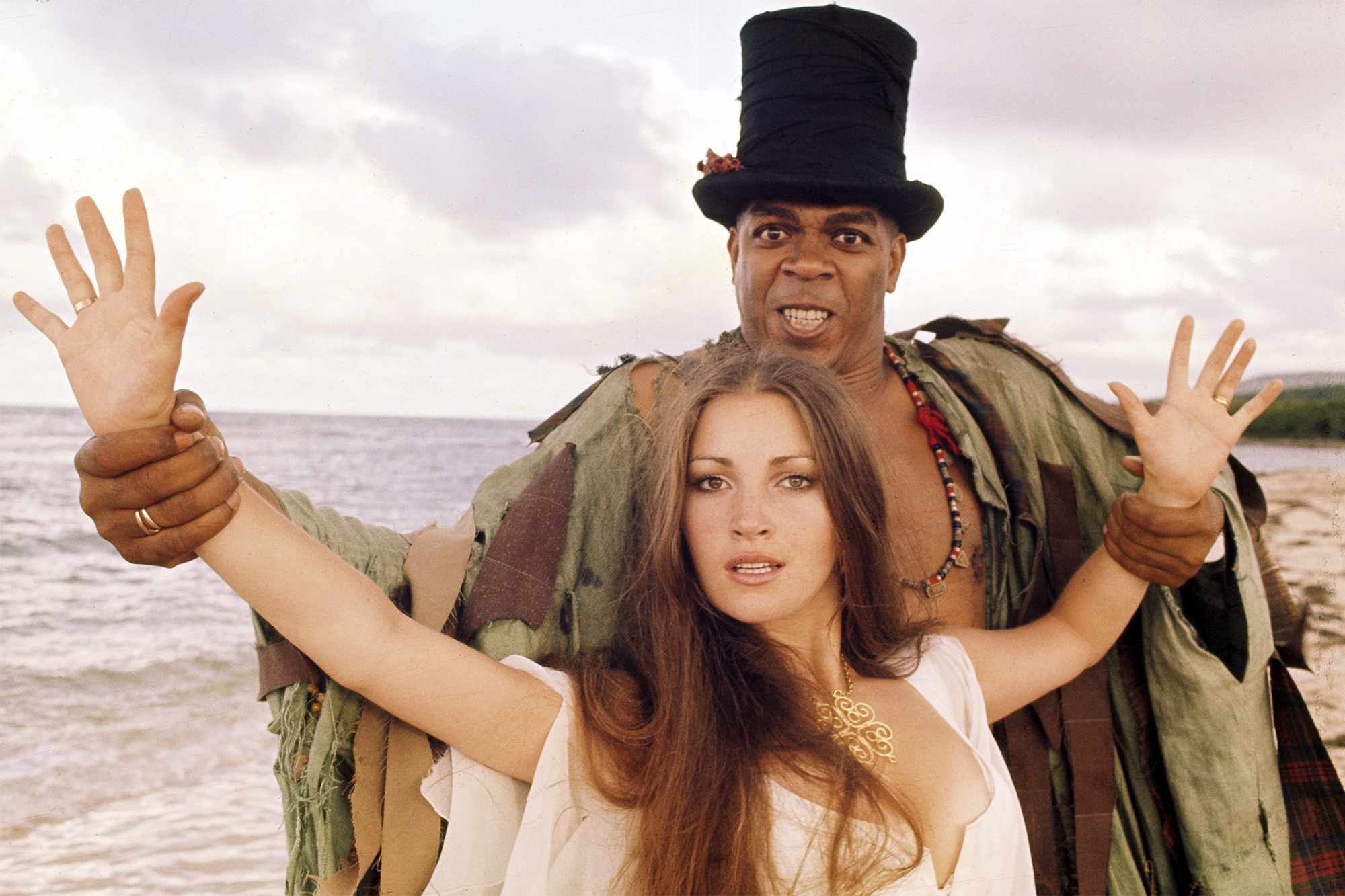
Performance-wise, once he really leans into the role (for me it’s when Moore is hang gliding, smoking a cigar, and then lands in a tuxedo), Moore becomes a lot of fun. He’s a little too old for the role, especially for his debut as 007, but I really enjoy his scenes with every actor, particularly Jane Seymour and Gloria Hendry in the two Bond Girl™ roles. But while the only thing Seymour (in her debut) gets to do is sleep with Bond, be psychic, and wear the thinnest fabrics possible, Hendry is a high-strung delight, and her complete opposite energy from Bond works in every scene they’re in together. And while Kotto does what he can with frankly bad material, Geoffrey Holder owns every single pixel of the screen as Baron Samedi, Kotto’s voodoo priest henchman.
There’s so much more I could discuss: the bon mots and zippy one-liners, the opening “funeral” procession, EVERYTHING with Mrs. Bleeker…we could easily double the length of this already surprisingly long entry. Goddamn McCartney and Martin, who take that title song and use it to its fullest. Martin taking a turn in the producer’s chair is great — I could easily see a world where different eras use different producers. But do others talk about the title sequence itself? Because this is easily my favorite one to date.
ANYTHING ELSE, JON? The plot of this movie is needlessly convoluted, and I think the two main casualties of this are Yaphet Kotto and Jane Seymour. When Kotto gets to monologue at the film’s conclusion, he really shines. And the method of his death is such a good idea that I can forgive its terrible execution. Up until that point, however, the shoddy Mr. Big persona seemingly obscures the ultimate plot, and so it’s hard to be invested when the most notable thing he does is get irrationally mad that Jane Seymour has slept with Bond. Speaking of which, in a movie with a literal unkillable henchman, I’m not going to ding the movie for giving Jane Seymour psychic powers, nor for taking them away from her once she’s had sex. What I will ding the movie for is not giving Jane Seymour anything to do other than follow Bond around after her powers are gone. Jane Seymour as a psychic is great. Jane Seymour as a piece of bait meant to lure Kananga to his doom is bad.
If there is one undisputed aspect of Live and Let Die that is great, and seemingly holds the entire film from falling apart, it is the theme song by Wings. The film’s producers know this, because it comprises the majority of the soundtrack. Any action sequence here is made better when that song kicks in. I believe this also may be the first instance of someone diegetically singing the movie’s theme song. I’ll be curious if that ever happens in the future.
THE FINAL WORD(S): For Jon, Live and Let Die is an awkward transition point in the franchise to be sure, but one it will survive. For Chris, it’s a rough start but really starts to find a strange and curious groove that works. Do I like Moore’s Bond? We’ll find out…
NEXT TIME: THE WORLD’S GREATEST VILLAINS TRIED TO KILL JAMES BOND…NOW IT’S SCARAMANGA’S TURN TO TRY IN THE MAN WITH THE GOLDEN GUN!
Leave a Reply