Being Film #2 for Hooptober 2025
I had the bar set low for The Black Phone, the latest horror collaboration between the writing/directing team of Scott Derrickson and C. Robert Cargill. On one hand, I wasn’t the biggest fan of either the Sinister films or Deliver Us From Evil, save for the gnarly exorcism. On the other hand, I’ve enjoyed Cargill’s novels and this latest film comes with some true horror bonafides, being an adaptation of a Joe Hill short story. The result is a tight, thrilling film that might be my favorite Derrickson showcase to date, visceral and honest without resorting to funneling in needless exposition or backstory. It’s creepy urban legends mixed with the usual King small-town supernatural, and I fell for it hard.
THE QUICK SUMMARY: In a small town in 1978 kids are disappearing, taken by someone the papers and the kids are calling The Grabber. Finn Blake and his psychic sister Gwen just want to survive school and their father’s drunken violence on account of his grief over their mother’s suicide, but too late: Finn becomes the Grabber’s latest victim. As Gwen tries to dream up the clues that will lead her to her brother, Finn realizes he may have a touch of the gift himself when the disconnected black phone in the basement cell he’s being held captive in starts to ring. When he answers, it’s the ghosts of the murdered kids, and they might provide a way out before Finn joins them…
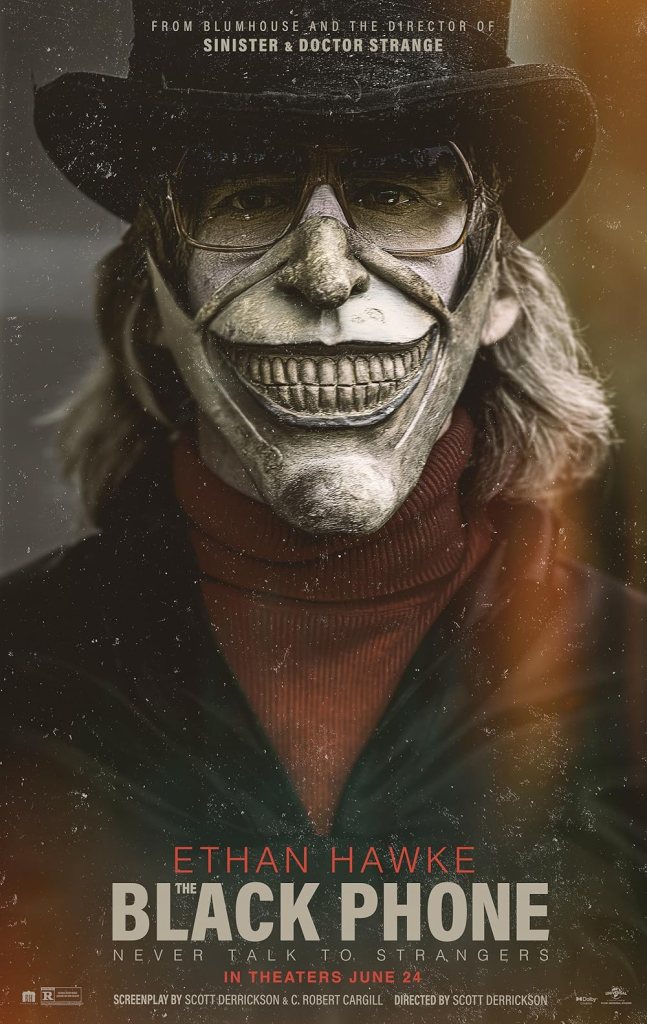
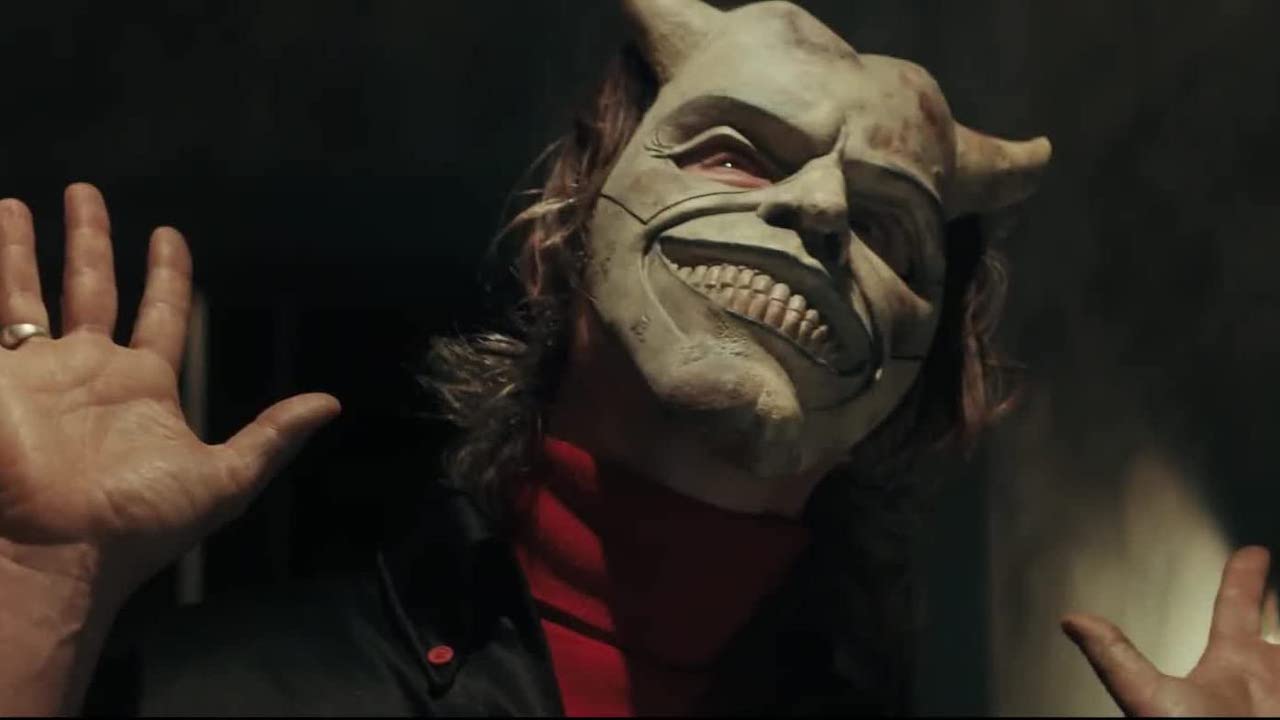
Much has been made of the film’s look, particularly the incredible masks Ethan Hawke’s Grabber wears. It’s truly mesmerizing, instantly iconic in a way Sinister never was for me, and Hawke is great in the role, making great use of his eyes and voice to convey everything his face can’t. In another touchstone for Derrickson, the 16mm footage comes back, not as home movies, but as the recollections and dreams of the other murdered kids. It’s a great touch, doubling down on the realism and sense of time and place the film establishes.
That sense of realism and honesty is wonderfully brought to life by the cast. Mason Thames is a great Finn, playing him as wounded and tough in equal doses, while Madeleine McGraw really shines as Gwen, getting the best sequence in the film, a gripping and terrifying lashing from her drunken father, played by Jeremy Davies in a role tailor made for him. He continues to look ridiculous, which I honestly don’t understand, but he brings a desperate, rage-filled grief to his role that was painful to watch for its despair. And any chance to get some choice Eddie Ransome time is fine by me.
The Black Phone also gets by without a lot of graphic violence. Almost everything is implied or shown after the fact: the one piece of real violence we get is sudden, and almost comical in its depiction. Instead of resorting to gore and creative kills, Derrickson and Cargill focus on Finn’s interactions with the other side via the phone calls, slowly building a plan that will allow him the slightest chance to escape with his life. The way Derrickson depicts both the conversations and the ghosts themselves is another highlight, unique and unsettling but also strangely beautiful. In fact there are certain comparisons you can make to Guillermo del Toro, especially to his work in The Devil’s Backbone and as a producer of The Orphanage.
Really pleasantly surprised how much I enjoyed this. I’m now really looking forward to the sequel with its more supernatural, Nightmare on Elm Street vibes, and might even just put this one on again before the season is over.
 Cinema Dual
Leave a comment