Something Like a Filmography takes a (brief) look at the filmography of Akira Kurosawa. Twice a month, Chris and Jon share their impressions of each film, both on its own terms and in terms of Kurosawa’s legacy and its intersection in the Cinema Dual hosts’ lives.
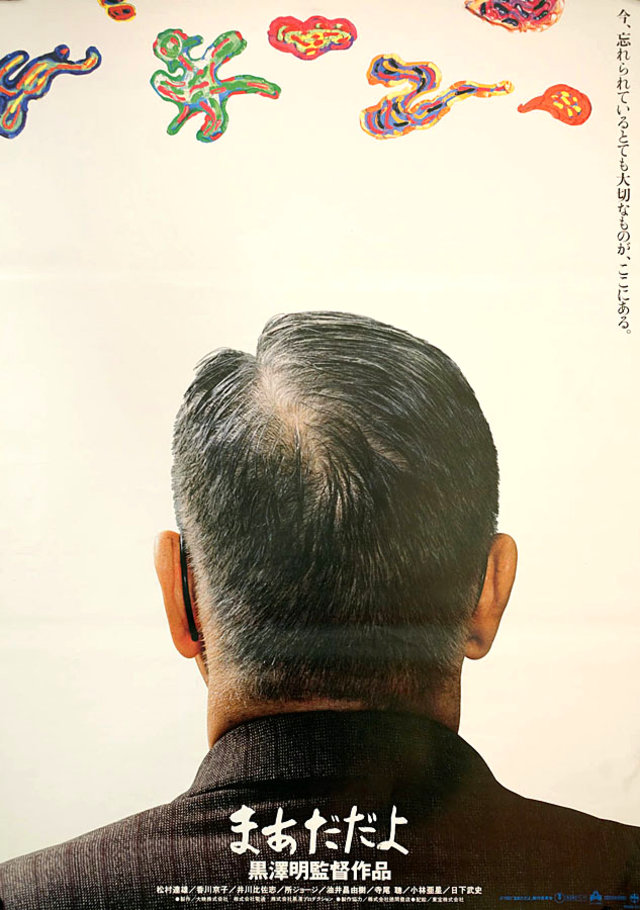
FROM THE BOX: For his final film, Akira Kurosawa paid tribute to the immensely popular writer and educator Hyakken Uchida, here played by Tatsuo Matsumura. Madadayo is composed of distinct episodes based on Uchida’s writings that illustrate the affection and loyalty felt between Uchida and his students. Poignant and elegant, this is an unforgettable farewell from one of the greatest artists the cinema has ever known.

WHAT CHRIS THOUGHT: The phrase “Madadayo” loosely translates to “Not yet”, something children say during a game of hide and seek. It’s also the prevailing thought in my head watching Madadayo, Kurosawa’s final film, a beautiful, elegiac ode to writer Hyakken Uchida and a meditation on Kurosawa’s own life, expressed in vignettes that recall the way our own minds traipse across memories, coloring them with cloudy impressions and moments of elevated emotion. I do not want this filmography to end.
Watching the film with the knowledge this was Kurosawa’s final film, and having the full breadth of the master’s work under my belt, I wasn’t shocked at being emotional. I was however shocked at the level of emotion that hit me. In many ways this feels like his most personal film: the way he allows small moments breathe, like Uchida chasing his wife so he can hold an alley cat that’s taken a shine to them. Those tiny gestures give his characters an inner life even some of his greatest works lacked. But I know as I sit here, early on a Sunday morning with the sun not quite up that Kurosawa’s greatest gift is reflecting what we need back at us. There’s a moment when his students buy a plot of land next to Uchida’s new home in order to stop an obnoxious wealthy businessman from building three-story house and blocking the sun that alights on the professor’s home. As they finalize the deal with the owner – a quiet, kind man who showed courtesy to Uchida – the scene is bathed in a golden glow and I started crying, because seeing this film, at this moment, when a simple act of humanity and kindness seems almost impossible reminded me that while ugliness and hate seem to be ever present, these small, simple moments of compassion and love are enough to light the entire sky.
WHAT JON THOUGHT: I think you could be forgiven for not expecting Madadayo, the final film from the master Akira Kurosawa about an aging professor not ready to die, to be as relatively funny as it is. Before the war, a couple of Professor Uchida’s students worry that the professor’s house is vulnerable to burglary, so they try to test out if they can break into his house. They are met with a bunch of handwritten signs directing the burglars on where to go. The tragedies of World War II that befall Uchida and his sadly unnamed wife are largely described in voice over narration. The film instead focuses on Uchida’s students, now all middle aged men, and how they continue to show up to support Uchida. In the first of the yearly Not Yet Banquets they put on, they sing a bunch of songs, and Uchida starts improvising lyrics about the awfulness of the US occupation of Japan, which is met with raucous laughter. Frankly, I think that one scene is a more biting critique on that subject than all of Rhapsody in August.
As the film veers on to other vignettes, it becomes less overtly comedic. There’s a subplot about a potentially inconsiderate neighbor with plans to build a large house that would obstruct the professor’s view. More time however is given to the adoption and eventual loss of the professor’s cat Nora. As someone who married into having cats, these pull at the heart strings certainly, but if the film has a weakness, it’s that this middle section doesn’t feel that substantial.
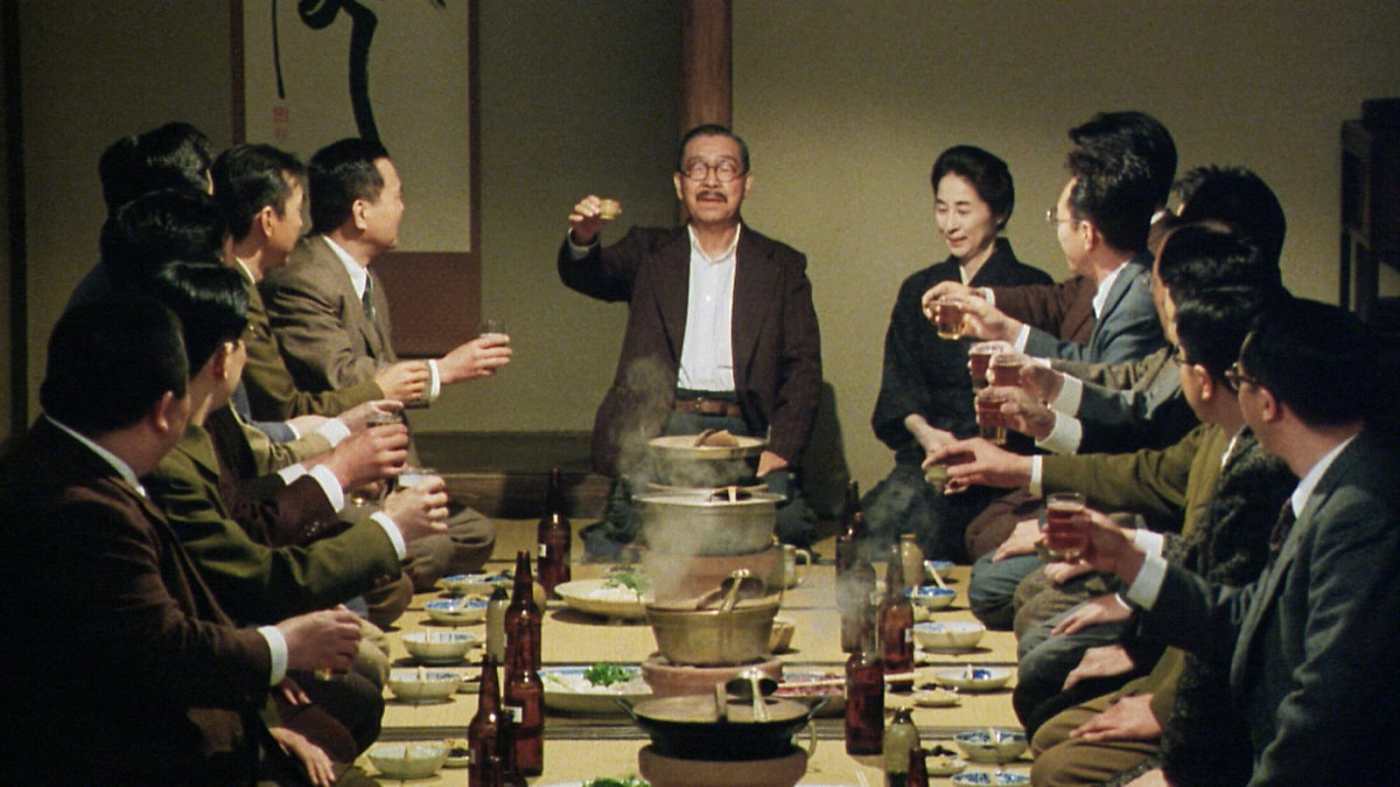
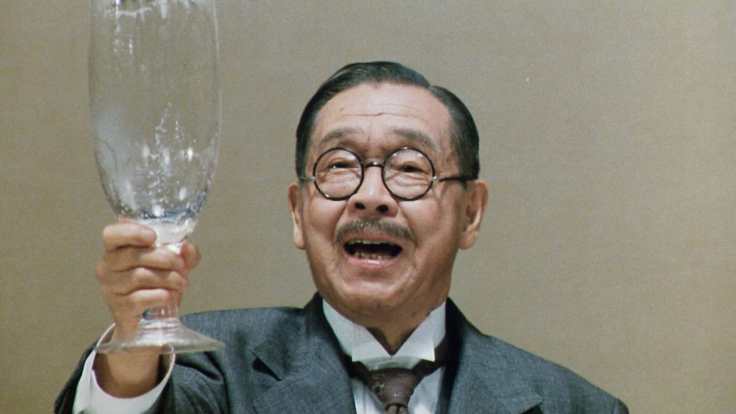
It’s as the film’s final section comes in however, and we cut to the 17th Not Yet Banquet, and we see how the affair has grown with multiple generations present, that the film snaps back into focus. The birthday cake has a reduced number of candles, the glass of beer the professor traditionally drinks in one gulp has been reduced in size, and of course there’s the arrhythmia scare that brings the party to a premature close. But even as the professor is escorted out of the proceedings, he still takes pains to tell his students’ grandchildren “not yet.”
ANYTHING ELSE, CHRIS? Even into his 80s Kurosawa hadn’t lost a step in his filmmaking prowess, and one of the things I’ll take away from this venture is just how strong his final stage of work is. By focusing on the ties of inspiration that bind Uchida and his students together he keeps what could have a shambling anthology tightly framed, keeping the former students love for their teacher consistent as the backdrop to Uchida’s ups and downs in the twilight of his life.
The centerpiece of the film, the first of the “Not Yet” banquets is a marvel of filmmaking, and how that is used to contrast to the final banquet with all of the families there to gather and show just how influential Uchida (and by extension, Kurosawa for me) was for them is the epitome of what I love about this art form. The performances are never broad – well, excepting maybe the obnoxious businessman – but do precisely what they mean to. Tatsuo Matsumura is fantastic as Uchida, his presence and demeanor mirroring a lot of what I always loved about my beloved Takashi Shimura. And as the two main students who lead the growing body of those whose lives where so positively impacting by Uchida I absolutely adored Hisashi Igawa and George Tokoro. And although she’s rarely the center of focus in the film, Kyōko Kagawa brings a delicate kindness and emotional balance to Uchida as his steadfast wife.
There are moments throughout Madadayo that recall every facet of Kurosawa’s career: one moment in particular, as the students go out in search of Uchida’s cat in the ruins of a building burned out in the war immediately brought back One Wonderful Sunday to me, while many shots of Matsumura’s face – whether drinking a massive draught of beer or looking straight into the camera in hopeless despair brought Ikiru to my mind. I know earlier we talked about how if Kurosawa had finished his career with his incredible epic Ran it would have been a fitting end, but then few wouldn’t have Madadayo, which has taken on a life for me the perfect, graceful cap on a genuinely astonishing career. To have come to the end of this journey with such a lovely film is a treasure I’ll forever hold close.
ANYTHING ELSE, JON? In the Kurosawa box set for Criterion, Donald Ritchie wrote that in Madadayo, a film about Uchida, Kurosawa intended to pay tribute to both his filmmaking mentor Kajiro Yamamoto and Seiji Tachikawa , a teacher who taught him to paint. I don’t doubt this to be true, but what I find more compelling, whether intended or not, is how the version of Uchida’s life presented here resonates with Kurosawa’s own. Specifically, the dynamic between Uchida and his students evokes similar relationships between Kurosawa and his devotees like George Lucas and Francis Ford Coppola, who rallied behind him after his career stalled out with Red Beard. Kurosawa also briefly brings us back to Dreams at the film’s closing, with a vision of young Uchida singing “not yet” against a backdrop of multicolored clouds. If Kurosawa did not feel ready to accept his own mortality in this final film, he certainly knew it was coming.
THE FINAL WORD(S): For Chris, Madadayo is another revelation, a new favorite Kurosawa and a true, beautiful epilogue to the work of a master. For Jon, Madadayo is a sweet and fitting conclusion to the life and career of one of cinema’s greats, Akira Kurosawa.
A Reflection
In looking back on the last 15 months of this project, I fee I’ve gained a more complete view of Kurosawa as an artist, not just his renowned masterpieces, but his flaws, and maybe more importantly, the quieter moments that showcased Kurosawa’s versatility. If I had a second highlight, it would simply be getting to read Chris’ reflections on each of these movies.
-Jon
Is it too much to say that, in reviewing the work of so singular a filmmaker that we in turn review ourselves? I wouldn’t want to put that burden on Kurosawa, or those words in Jon’s mouth, but over the course of the year and a half I spent watching, writing, and discussing this with Jon I learned just as much about myself as I did about Kurosawa.
-Chris
For everyone who followed along, read these words and watched these films, I hope it brought something to you like it did to us.
Until next time.
 Cinema Dual
I lost track of the late Kurosawas. I must hunt them down and watch them.
LikeLike