
Something Like a Filmography takes a (brief) look at the filmography of Akira Kurosawa. Twice a month, Chris and Jon share their impressions of each film, both on its own terms and in terms of Kurosawa’s legacy and its intersection in the Cinema Dual hosts’ lives.
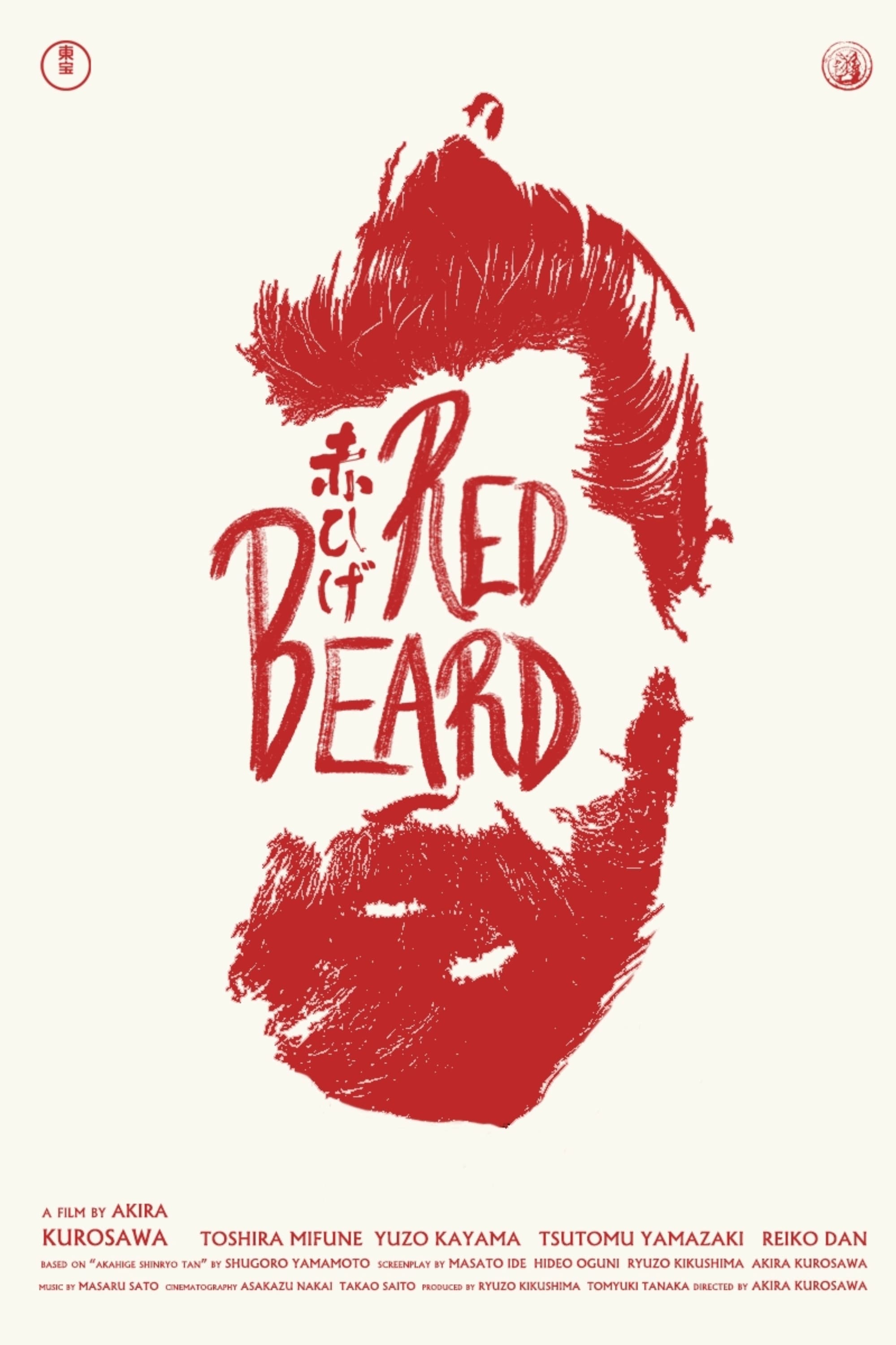
FROM THE BOX: A testament to the goodness of humankind, Akira Kurosawa’s Red Beard (Akahige) chronicles the tumultuous relationship between an arrogant young doctor and a compassionate clinic director. Toshiro Mifune, in his last role for Kurosawa, gives a powerhouse performance as the dignified yet empathic director who guides his pupil to maturity, teaching the embittered intern to appreciate the lives of his destitute patients. Perfectly capturing the look and feel of 19th-century Japan, Kurosawa weaves a fascinating tapestry of time, place, and emotion.

WHAT CHRIS THOUGHT: Let’s get a few things out of the way at the onset: Kurosawa’s 24th film is too long. It wears its themes very much on its sleeve, and for once I’m ever so slightly put off by Masaru Sato’s overly sentimental score. The story attempts to encompass a much larger swath of characters with various subplots that feel thinly sketched at best. All of this true.
And yet…I was utterly enraptured by Red Beard.
I could attempt to justify my feelings. Maybe it was the perfect scenario of being alone on a cold, winter day, ensconced in a blanket with some hot coffee and having the time and solitude to watch a three hour film about a young, conceited and arrogant doctor with designs to be the Shogun’s personal physician who instead spends his…internship, I guess?… tending to the poor in a free clinic with an aloof, gruff elder doctor. I could try focus on the dynamic filmmaking, the way Kurosawa changes style to suit the action, whether it’s the mid-movie fight scene, more graphic than anything he had done before (excepting the incredible surgery scene that happens early in the film), the sublime flashback sequence of Sahachi and Onaka, and that startling shot of Osaka framed by a brilliant white that feels like the sun devouring her.
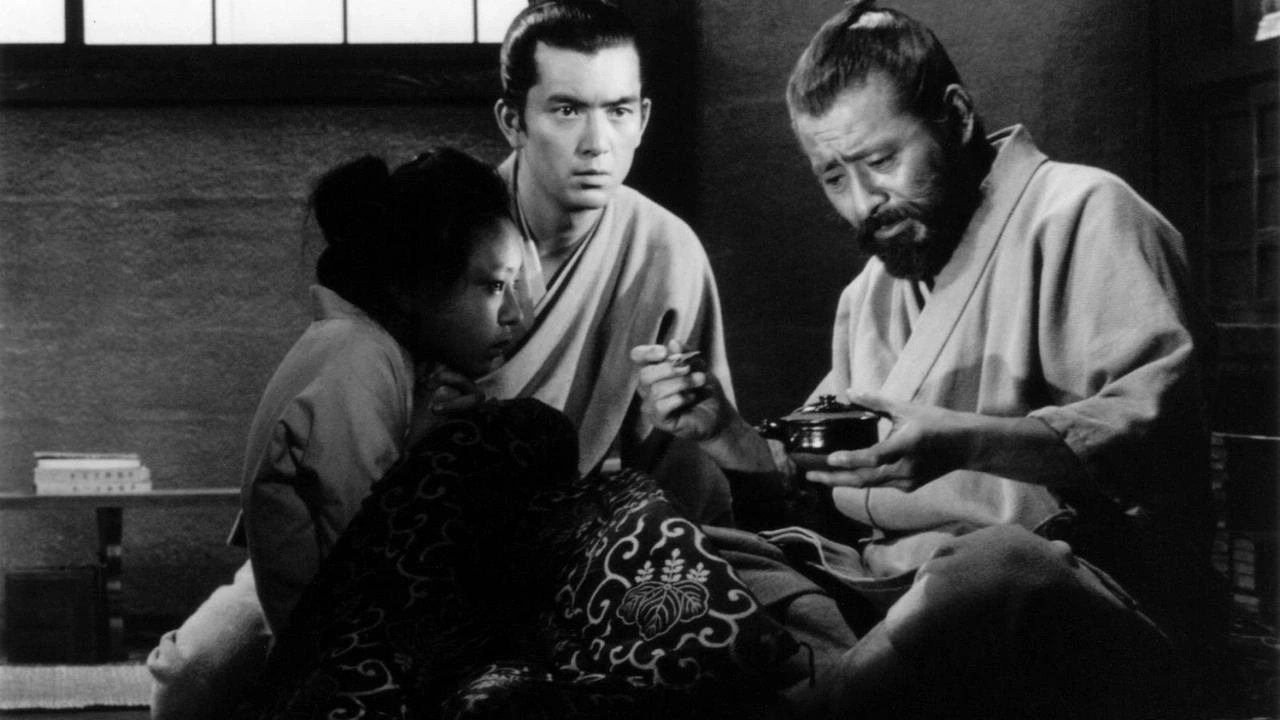
All of these things can go toward some intellectual expertise of “justifying” a film, but in the end it’s simply that Red Beard captured my heart, regardless of the circumstances. Its length only drew me in deeper, its sub plots and diversions only brought me closer to the characters, and its heart on sleeve themes and actions brought me to tears multiple times throughout the film. And in Dr. Kyojō Niide, Red Beard himself, Toshiro Mifune crafts a character for the ages, his age and experience and weary yet unbroken resolve etched into every line of his face, every whisker of his incredible beard.
WHAT JON THOUGHT: Early on in my Kurosawa journey, I remember initially liking Red Beard because Mifune’s character seemed to fit a familiar archetype of a genius doctor whose radical notions of seeing his patients as people vs symptoms put him on the fringes of conventional practices. Indeed, the conflict between Drs Niide’s and Yasumoto’s differing viewpoints form much of the dramatic tension of the movie. This time around however, it became much more obvious that Niide is the stable foundation against which Yasumoto bounces off of, and has to react against. More than the samurai movies that made him famous, Mifune’s performance as mentor here is really what makes me wish he had gotten the chance to play Obi Wan in the original Star Wars.
Red Beard itself however, is much more Yasumoto’s movie, as he is the character that shows growth. While not the most complicated of plots, Kurosawa, along with the actor Yuzo Kayama, effectively reveal Yasumoto to be a well off self-centered jerk, merely using this posting in order to leverage a more lucrative one. It’s only through Dr Niide’s stern and repeated insistence that he do work that would be considered beneath someone of his stature that the arrogance is slowly stripped away, and allows him to eventually connect with his patients. Ultimately, Yasumoto rejects his high standing in order to continue the work of helping people.
This brings me to my only real criticism of the movie, which is that the underlying thread of Yasumoto’s enlightenment (which is what I really responded to) runs out of steam before the movie’s 3 hour runtime is over. To be clear, I am grateful that Kurosawa gives the various character studies here more room to develop than in The Lower Depths. Red Beard doesn’t shy away from suffering at all, and is more coherent. But I effectively get most of what I enjoy from Red Beard in the first half, and the second half doesn’t pull me in the same way, until you get to the cathartic, if expected change of heart at the end.

ANYTHING ELSE, CHRIS? So much else! But I’ll limit myself to a few things. Despite the period setting and narrative moments that share a kinship with the Hollywood golden age of cinema (the whole subplot with Otoyo and her friendship with the destitute Chobu could have been ripped from a Chaplin film) Red Beard feels thoroughly modern. I don’t know that Kurosawa ever crafted a scene as erotically tense as the sequence where the disturbed Mantis seduces and then tries to kill Yasumoto, the intern. Then there’s the explicit and graphic surgery scene, which in many ways looked more realistic than films coming out 10…even 20 years later. The massive, practical sets Kurosawa had built are put to magnificent use; I’m sure the studio complained they weren’t used to the extent expected after the cost, but Kurosawa knew exactly what he was doing: making this world live.
And live Red Beard does. It’s been a few days since watching it (I loved it so much I watched it twice) and there are still moments I can’t shake. That single image of Onaka against the blinding light. The heartbreaking sequence where Otoyo, the young abused girl who impetuously shatters a bowl as Yasumoto tries to give her medicine begging in the street to secretly buy a new bowl…only to have it fall and shatter when she’s discovered. As brilliant as Mifune is as Red Beard, it’s Terumi Niki as the young Otoyo who’s the secret weapon of the film, the change agent who brings so much of the emotion to the story. As much as the scene with the shattered bowl broke my heart, the scene where the entire kitchen staff of the clinic, who dismissed and criticized her the entire film, rise up and beat the whorehouse madam who tries to reclaim her had my heart beating out of my chest as I cheered.
I love the sudden and inexplicable martial arts scene. I love how it positions Red Beard the character as someone who is much more than the solid and just doctor, but a man of action whose resolve to do the right thing can burst through his own moral code. The coda, where he makes sure these broken (literally, this is once graphic fight scene) men are tended to grounds that resolve even further. And for Mifune, it shows that 20 years into an awe-inspiring career he can still very much kick your ass, thank you very much.
Finally (apologies, I thought this would be brief), I love the raw, bloody and beating heart of this film. Red Beard feels like Kurosawa sensing he was nearing the end of his golden reign, and so tried to put everything he could into this film. All of his politics, he observations on class, on the human condition, even his growth as a filmmaker…it’s all on display in this film and messy as it is, it feels so open and honest to me that I can’t help but love it back the same way, with every piece of me.
ANYTHING ELSE, JON? The well known fact of Red Beard is that because of production delays turning into financial strains for Mifune, his relationship with Kurosawa soured and the two did not work together again. Red Beard is also Kurosawa’s last black and white film, and his cinematography, as well composed as ever, doesn’t feel as flashy here. The only two scenes that break the more contemplative bent of Red Beard are the fight that Mifune gets into, which made me laugh, and the surgery scene, which is possibly the most unnerved I’ve been in a Kurosawa movie. Finally, I can’t help but notice that through an early conversation with Niide and Yasumoto, Kurosawa expresses the idea that politics has never been able to solve people’s problems, and seemingly wants to spend his energy elsewhere. Given the consistent theme of societal problems within Kurosawa’s body of work, I wonder if Red Beard marks a shift for Kurosawa’s own outlook.
THE FINAL WORD(S): For Jon, while successful in most respects, Red Beard isn’t the highest note to go out on for Mifune in this series. For Chris, Red Beard is…well…before he gets caught up again with another thousand words just go back and read his sections. TL;DR? He absolutely loved it, and found a new favorite Kurosawa.
NEXT TIME: We leave the 60s, Mifune, and black and white films behind…next up, it’s a new era with Dodes’ka-den.
 Cinema Dual
Leave a comment