Something Like a Filmography takes a (brief) look at the filmography of Akira Kurosawa. Twice a month, Chris and Jon share their impressions of each film, both on its own terms and in terms of Kurosawa’s legacy and its intersection in the Cinema Dual hosts’ lives.
FROM THE BOX: Toshiro Mifune swaggers and snarls to brilliant comic effect in Akira Kurosawa’s tightly paced, beautifully composed Sanjuro. In this sly companion piece to Yojimbo, jaded samurai Sanjuro helps an idealistic group of young warriors weed out their clan’s evil influences, and in the process turns their image of a “proper” samurai on its ear. Less brazen in tone than its predecessor but equally entertaining, this classic character’s return is a masterpiece in its own right.

WHAT CHRIS THOUGHT: Is Sanjuro Kurosawa’s most commercial, accessible film? Possibly; we could argue other films but what is abundantly clear is it is certainly the Bud Lite to Yojimbo’s more full-bodied beer (I don’t drink beer, so use your own alcohol analogy here). The stakes are lower, the comedy and characterizations are more broad – there are moments where Mifune seems to impersonating his wandering ronin as opposed to inhabiting his skin again. But that loose, shaggy quality has its own charms, and there is a lightness that makes Sanjuro an enjoyable if not exactly satisfying watch when compared to Kurosawa’s other works.
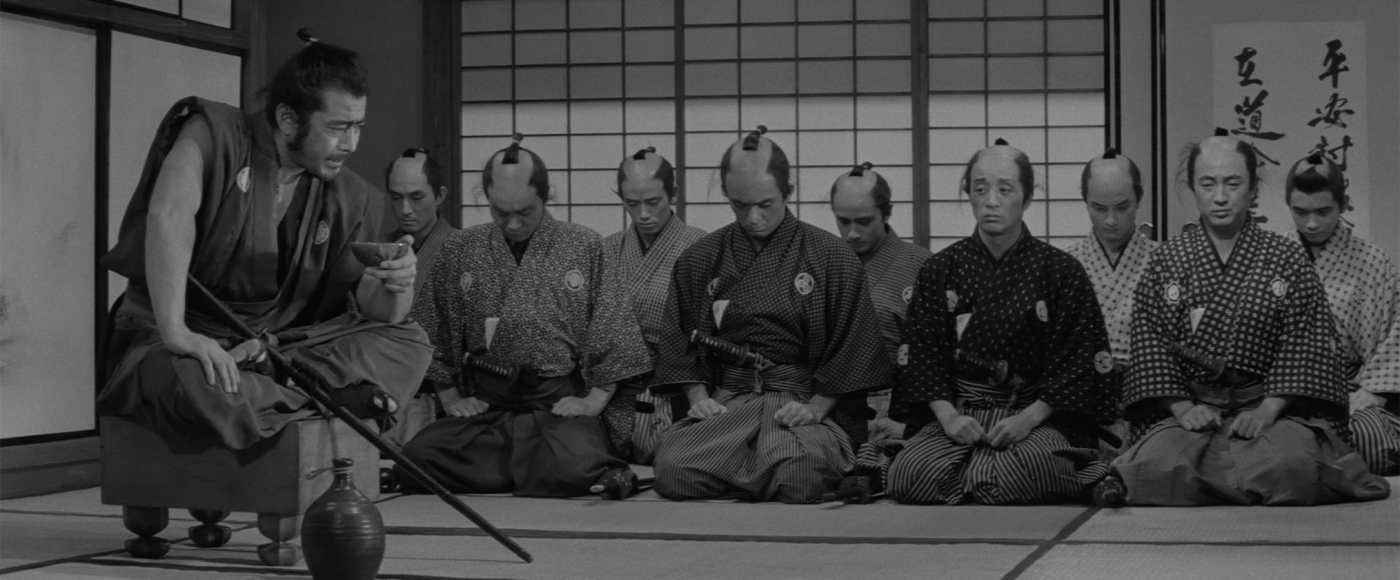
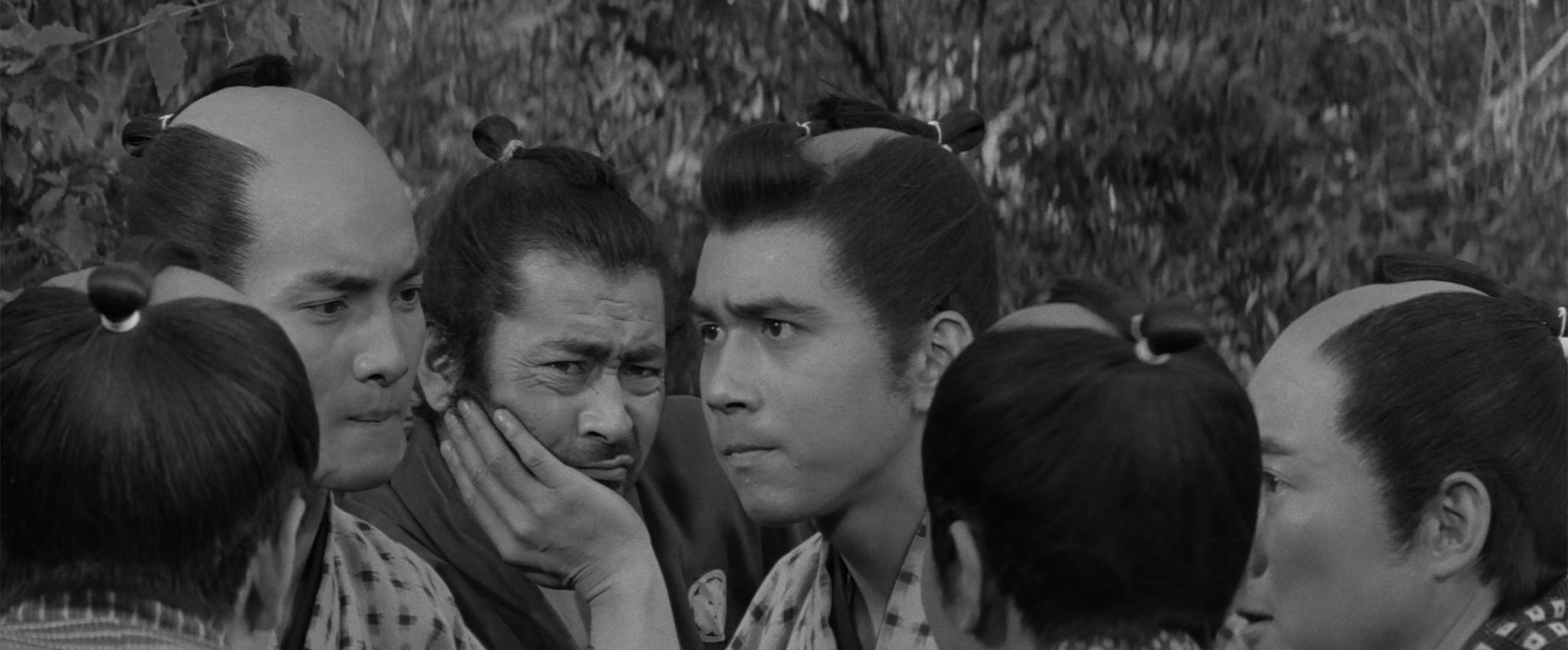
The lightness in the story and narrative however are not reflecting in the filmmaking itself. This is the film where Kurosawa absolutely falls in love with the widescreen, taking every opportunity to cram his characters into the frame in unique and interesting ways. He also gives his female characters more to do, and it’s a blast to see Takako Irie as the chamberlain’s wife go toe to toe with Mifune and largely win. Mifune’s exasperation is a delight every single time.

WHAT JON THOUGHT: Going into this series, I held onto a small secret I almost never shared with anyone. I preferred Sanjuro to Yojimbo, because I thought it was funnier. Revisiting both movies this time around, I still hold that Sanjuro is more outwardly comedic than its predecessor, mostly because of the dynamic between Mifune’s jaded Sanjuro and the naive young samurai that fall under his mentorship. Mifune being exasperated at yet another mistake made by his charges is eminently relatable and funny.
I think what shifted for me in this viewing was the realization of how lower the stakes are in Sanjuro vs Yojimbo. Our heroes are indeed often boxed in by larger forces, but very rarely do you the audience actually believe that Mifune won’t manage to trick or cut his way out of anything sent his way. Even Tatsuya Nakadai, Mifune’s nemesis in the last film and also very good here, mostly works here as a “more competent than avergage” henchman, at least until the film’s ending. Don’t get me wrong, I’d vastly prefer a lighter comedy like Sanjuro to something like The Lower Depths, because it almost all still works for me. This is an perfectly enjoyable romp.
ANYTHING ELSE, CHRIS? It’s always fun to see how Kurosawa re-uses his actors, and seeing Tatsuya Nakadai again play Mifune’s nemesis (sans gun this time) has its charms. Takashi Shimura is firmly aging into a solid character actor, but I do wish he was more active. Ultimately this is a thin post for a thin movie, one that blasts by in about 90 minutes and leaves you empty but still with a smile on your face.
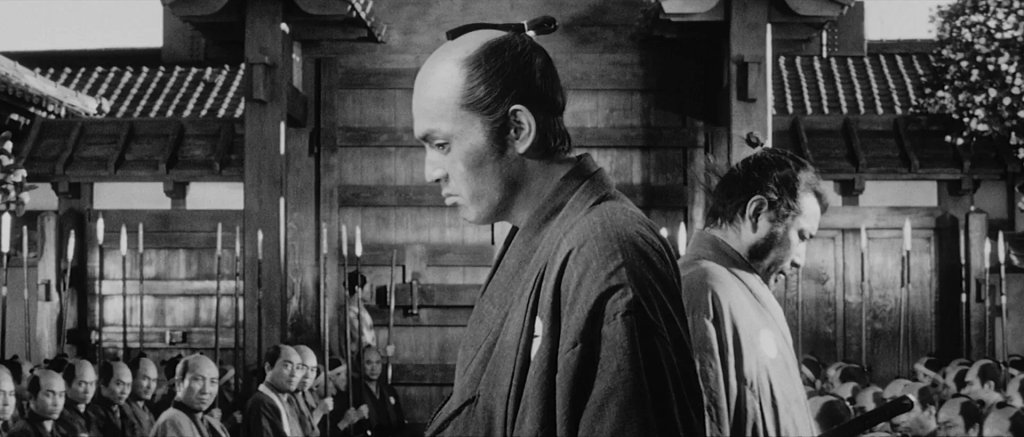
ANYTHING ELSE, JON? I love when Chris and I can read each other’s in progress writings while composing our own because I also wish that Takashi Shimura, who hasn’t lost his touch, still got to occupy more central roles in Kurosawa movies at this point. It’s like having a Ferrari and using it to just buy groceries. And I definitely agree about filmmaking not slouching to match the more laid back nature of this film. With a larger ensemble to keep track of, Kurosawa still “Tetris-es” his cast in interesting ways. And I’d be remiss for us to go through this whole post without any mention of the film’s iconic shot, the fountain of blood spraying out of Tatsuya Nakadai at the film’s final dual. I’ll be curious if by the end of this series if that isn’t Kurosawa’s most excessive piece of on screen violence. It’s certainly memorable.
THE FINAL WORD(S): For both Chris and Jon Sanjuro is a light romp that’s fun and funny but ultimately lacks the weight of Kurosawa’s deeper, more ambitious works.
NEXT TIME: Kurosawa adapts Ed McBain in the classic noir thriller High and Low.
 Cinema Dual
Leave a comment