

It Lives Inside is the debut feature film of Bishal Dutta. This might be the first wide release Indian-American horror film. Instead of relying on the Christian and European based horror tropes, the movie introduces audiences to the mythology and mysticism of Hinduism. It’s an impressive and confident debut for a first time filmmaker. It has its flaws but those are outweighed enough by Dutta’s ability to create excellent scares.
It Lives Inside centers the story around Indian-American teenager Samidha. Samidha doesn’t want to be seen as an other. A child of Indian immigrants, Samidha makes a significant effort to fit in with her white classmates. This includes shortening her name to Sam, speaking English to her Hindi speaking mother, and doing homework for her classmates. However, her goth looking former childhood friend Tamira keeps trying to talk to her. She finally corners Samidha in the locker room begging her to pray over a weird mason jar. Apparently a monster lives in the jar. Samadhi, feeling the pressure of her “cool” white friends observing the situation, does what any teenage girl would; berates her former friend and smashes the jar. Surely nothing can happen. It’s only a jar. Soon after an invisible force kidnaps Tamira and begins stalking Samidha. Samidha starts having nightmares. The same entity brutally attacks people close to her or kills them. It’s only when Samidha embraces who she truly is and the people around her that she can defeat the demon called the Pishach.
A lot has been written about how It Lives Inside seems like yet another clone of It Follows, one of the great horror films of last decade, or is a lesser version of last year’s Smile. It goes without saying that It Follows is in the DNA of this film. There’s a kill in this film involving a swing set that feels particularly inspired by that earlier film. Yet watching It Lives Inside, the film that most came to mind was Jonathan Demme’s 1991 masterpiece Silence of the Lambs. A young woman gets kidnapped by a killer, with the kidnapping unseen by others. Our heroine must then find her before time runs out for the victim. We frequently see this victim in an underground lair frequently tormented. The heroine can only truly defeat this predator by confronting her past. While there’s no Hannibal Lector stand in (unless you count Samidha’s mom which seems cruel), Samidha does have a supportive mentor figure in a teacher played Betty Gabriel. This is a film with genre roots that go deeper than the recent past.
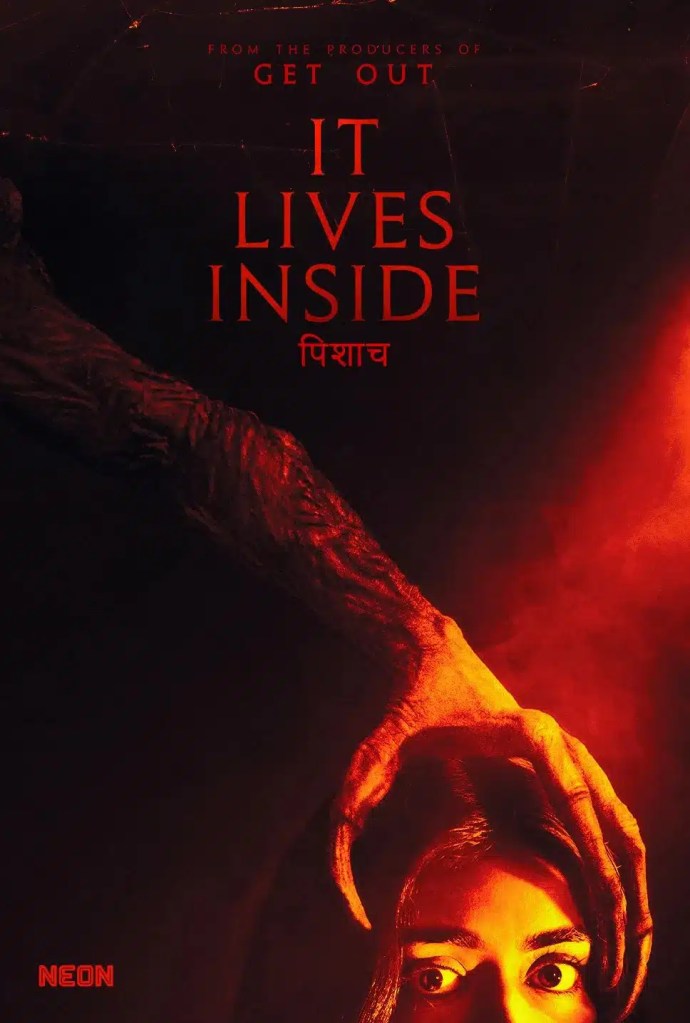
It’s easy to peg the Pischach as an invisible killer like the monsters from It Follows or Smile that haunt their victims before murdering them. However, Dutta takes great pains to make the Pishach a predatory creature. An actual demon from Indian mythology, the creature hunts those that feel shame. It’s easy to see why Tamira felt this but those early scenes paint the picture why Samidha is such an easy target. Here’s a person ashamed of where she comes from, the shame that others put on herself, and how ashamed of who she is. The real struggle of the film is her trying to accept her heritage. It’s only when she accepts herself and her community that she defeats this monster.
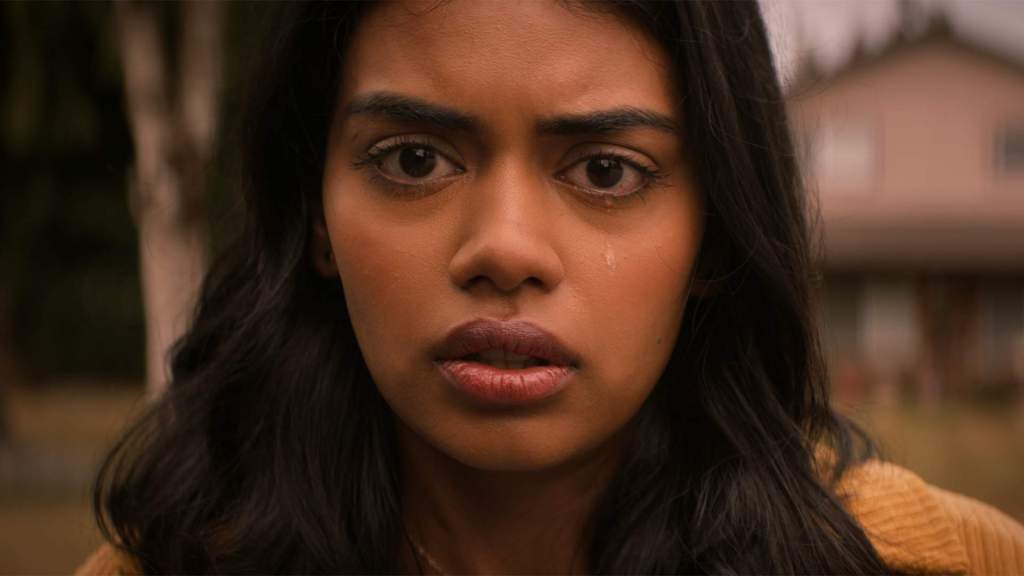
Something else distinct in this film is that Dutta borrows visual tools from outside of horror movies to tell his story. Again, it’s hard to not overstate the influence of Jonathan Demme on this film. How many horror filmmakers borrow that center frame close up Jonathan Demme favored in his films? There’s the real sense of community that’s present in so many of Demme’s films in this one. Also soon as Tamira comes in on a floating dolly shot, a hallmark of Spike Lee films, you get how far Dutta goes outside the genre for tools to use making a horror movie. Most first time horror filmmakers seem to only borrow the same elements from the horror movie toolkit. Dutta wants to bring in wider influences.
This isn’t a perfect film. The finale becomes a miss mash of different monster movies. The Pishach eventually turns into the Predator as the film comes to close. And the less said about the visual effects during the climax in the basement, the better. Still these are minor issues.
It Lives Inside announces a new horror voice. The use of Hindu mysticism brings new ideas to American horror films. Additionally, Bishal Dutta’s use of filmmaking styles outside of horror allow him to convey the emotions and terror of his characters in new ways. It’s not a perfect film and kind of falls apart in its climactic scenes. However, Dutta is an interesting enough filmmaker that hopefully this isn’t his sole outting in the genre.
 Cinema Dual
Leave a comment