
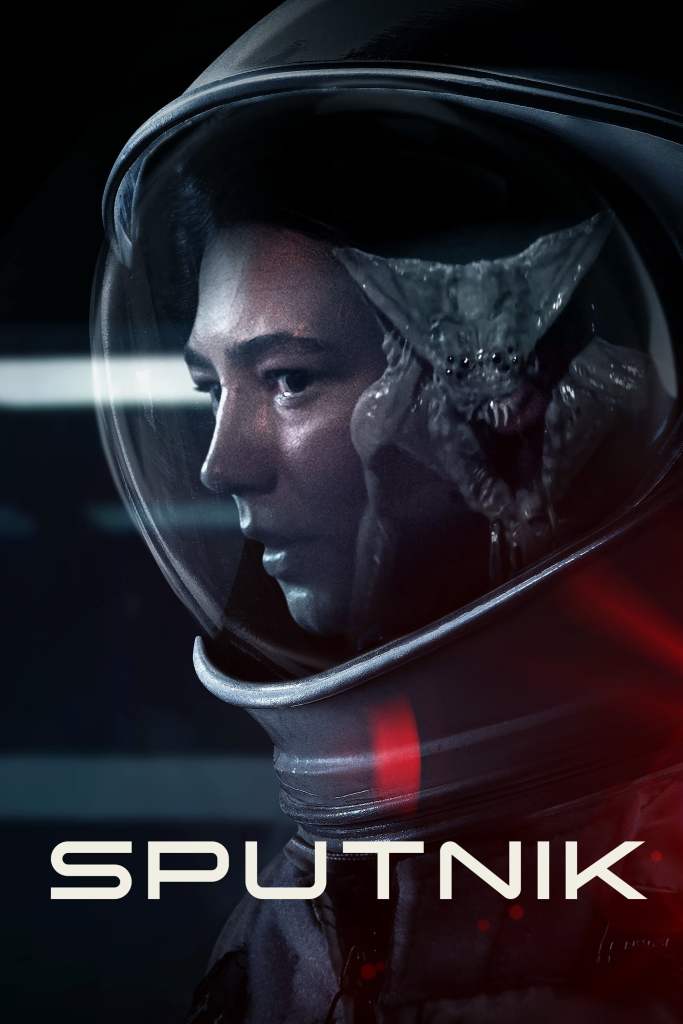
The 2020 Russian film Sputnik starts off in a manner familiar to anyone who has watched a movie in a post-Alien world. Two cosmonauts in 1984 sit in a capsule ready to return home to the Soviet Union. They talk about what they’re going to do once they land. As they begin their descent, the systems fail on their capsule. One of the cosmonauts looks over the shoulder of the other. Something is outside the capsule and wants to come inside. The scene then shifts to night in Soviet Kazakhstan. A goat farmer comes across the capsule. One of the cosmonauts sits on the ground, a bloodied corpse. The glass on their space helmet appears to be smashed. The farmer looks over to the capsule and sees the other cosmonaut crawling out. He looks at the farmer. His eyes are black and he screams wondering what has happened.
If the rest of the film was judged based on its opening, Sputnik might seem like every other space horror film of the last forty years. A viscious parasitic creature hides in a human host. The creature is deadly and capable of killing very well. A company, or in this case the government, wants to exploit this as a weapon. The people in the path of the creature have to figure out a way to survive both the creature and their employers/leaders. Alien did this so well that every film stuck to that template for better or worse.
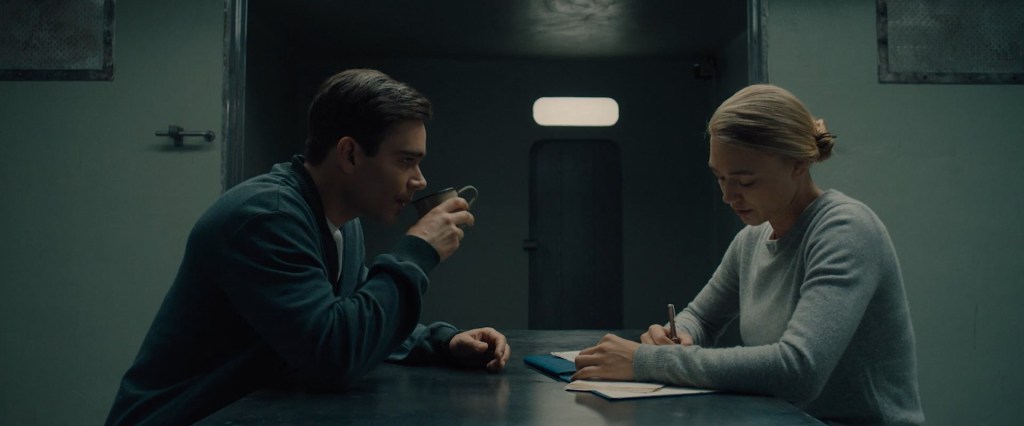
There’s definitely aspects of Alien in this film. Set in 1984, military commander Colonel Semiradov whisks young neuroscientist Dr. Tatyana Klimova to a secret lab in Soviet Kazakhstan. The colonel lets her know that the military now holds the cosmonaut from the beginning of the movie, Konstantin, in a secret facility. He says that he has amnesia. The colonel tells her that the military wants to find out what happened on the mission. She determines the amnesia is PTSD related. It’s only when an alien creature climbs out of Konstantin’s mouth that the situation changes. Klimova spends the rest of the movie trying to understand what this creature is. The military of course wants to exploit it. The other scientists at the facility see it as a way towards a Nobel Prize.
Except when watching the full film, the inspiration that comes to mind here is not Alien but the British film and television series Quatermass. The various Quatermass centers around Professor Bernard Quatermass and his encounters with extraterrestrials phenomena. While most of these serials end with Quatermass having to destroy the aliens, which range from space viruses to ancient aliens, there’s a healthy respect for scientific discovery in these stories. Sputnik follows in that tradition. This is not a film about survival but one of understanding. The science and pathology of this creature is more important than the kill count. There’s not the sense of capitalist nihilism present in Alien and its many imitators. The military might try to control the alien creature but the heart of this film lies in Klimova’s desire to understand both the creature and Konstantin. She’s brought to facility in an effort to separate the man from the creature. Yet instead of trying to destroy the creature, she works to save both.
And what a creature it is. Described by a character in the film as using Konstantin as a spacesuit, it shares a symbiotic relationship with the cosmonaut. The creature is probably one of the most unique alien designs in recent years. It has the head of a cobra and the body of a walking stick. It rears up on legs that unfold out of it and moves like lightning. When it kills a person, the film barely registers the movement of the kill. Kudos to the VFX team making a creature this lithe so terrifying.
Sputnik is an alien story that comes from a rich tradition of science fiction and horror storytelling. Both the characters and filmmakers share both fascination and terror with the creature we see in this film. It’s almost documentary like in its portrayal of this vicious alien visitor. Yes, it takes after one of the greatest science fiction horror films of all time but it’s so much better for not copying it note for note.
 Cinema Dual
Leave a comment