
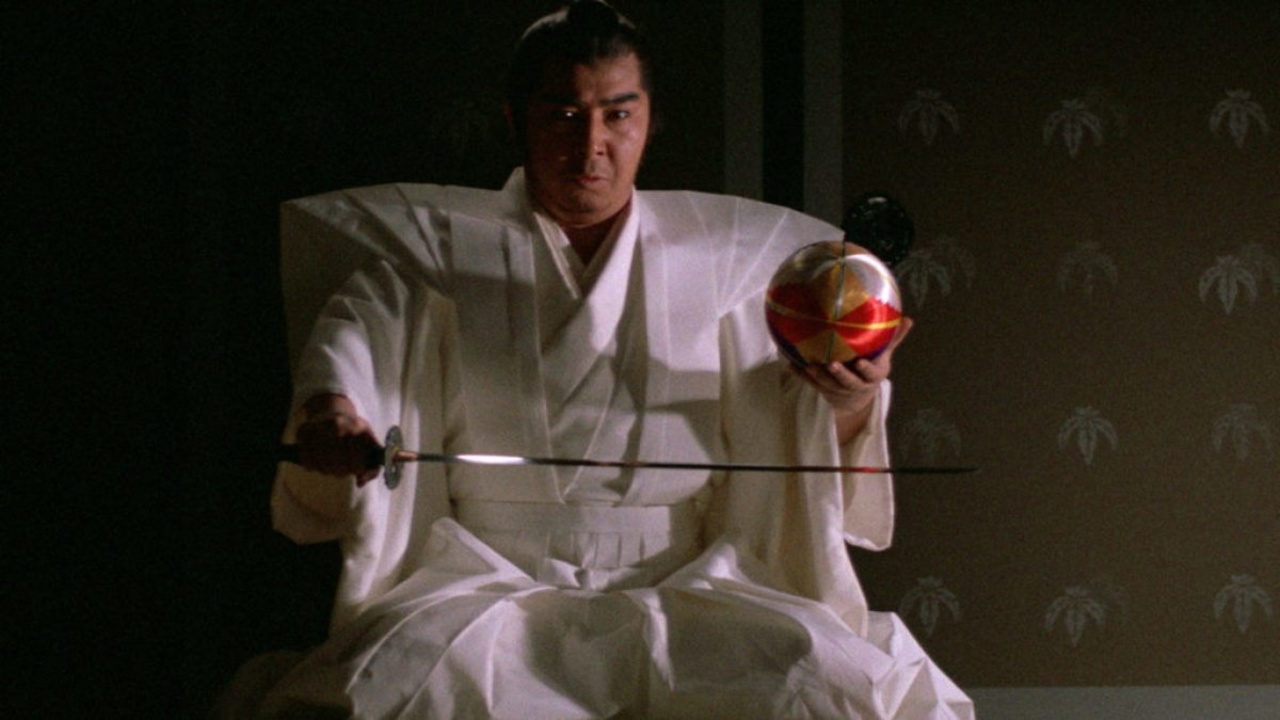
Choose The Sword takes a (brief) look at the film series Lone Wolf and Cub. Twice a month, Jon and Chris share their impressions of each film, both on its own terms and its intersection in the Cinema Dual hosts’ lives.
FROM THE BOX: The inaugural film in the Lone Wolf and Cub series immediately thrust Itto Ogami into the ranks of the all-time great samurai movie icons. In this installment, the Shadow Yagyu clan plots to solidify its power by taking Ogami’s coveted position of shogun’s executioner for its own. The legendary assassin escapes with his infant son, Daigoro, and swears vengeance.
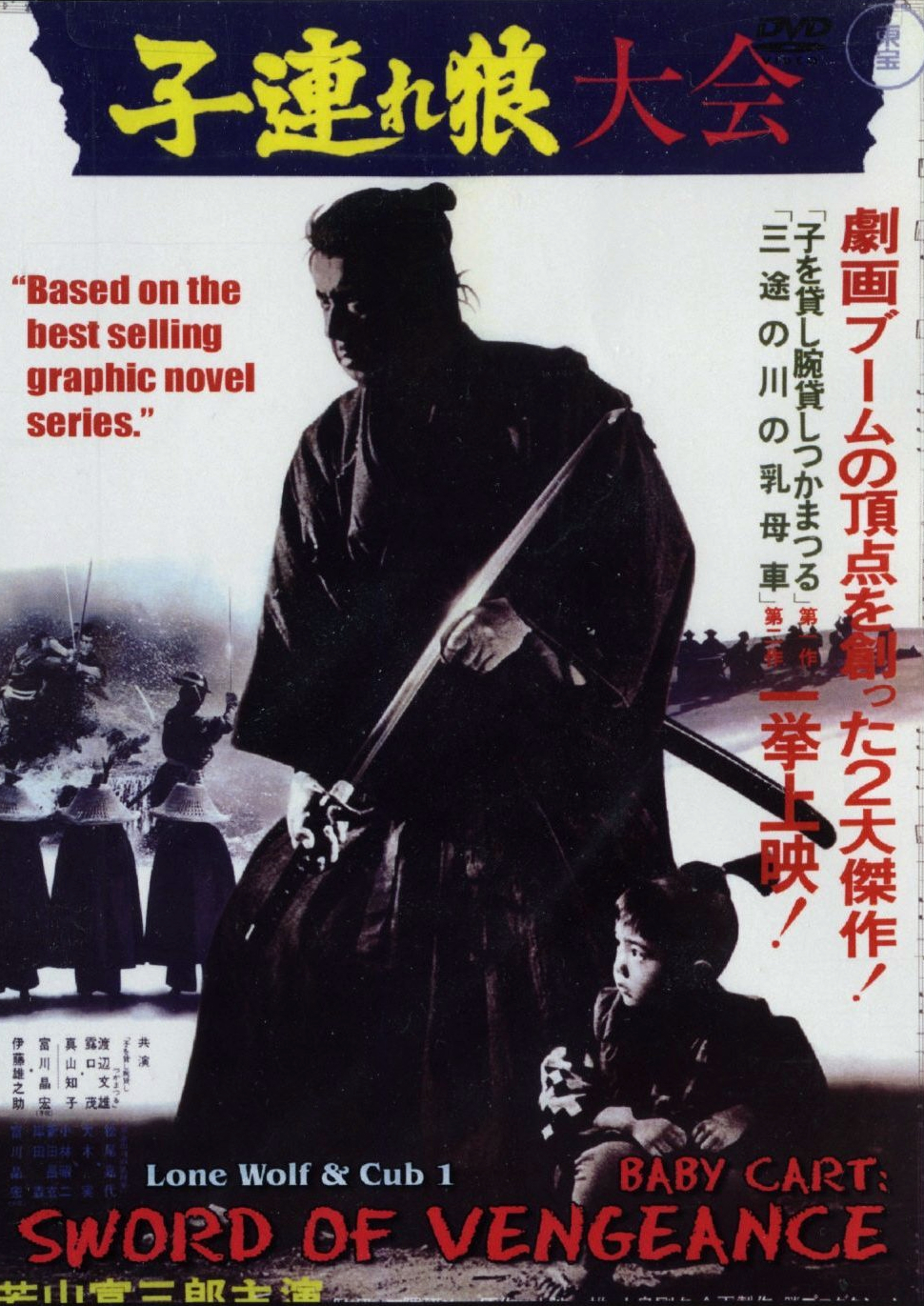
WHAT JON THOUGHT: What stands out to me immediately at the beginning of this first entry is the film’s flashback structure. After an initial introduction to our protagonist Ogami Ittō, wherein he beheads a toddler lord, we cut to him traveling in shoddy clothes with his own toddler Daigoro in a cart, with a sign advertising his services as a swordsman. Only later do we then get the backstory that he was not just exiled for beheading random children, but rather that he was the shogun’s executioner. We then spend the next section of the movie following how his wife Asami was murdered and he was framed for betraying the Shogun by the shadow version of the rival Yagyū clan, who are plotting to take over Ittō’s position.
The film briefly cuts back to the present wherein Ogami gets his first job as a ronin, but then we’re back to fill in the backstory of how he escaped the inevitable order from the Shogun to commit seppuku, live out his days in the Demon Way in Hell (ie: without honor) until he can avenge his wife and clear his name. The river fight and the field duels are some of the most exciting sequences in the film.
It’s only late in the film when you get to Ogami’s present job, to prevent the assassination of a sickly heir traveling through the forest, by taking down the people hired for the job. Under an alias, he allows himself to be captured and beaten by bandits, and in accordance with the Demon Way in Hell, does not flinch when ordered to sleep with a sex worker. No one suspects his identity until the time for the conspiracy to unfold, at which point the bandit leader realizes who Ogami is, and Ogami uses this moment to show how fortified the cart holding Daigoro is. A final bloody confrontation stops the conspiracy in its severed tracks. It’s a good ending, but is only one chunk of the whole film. With the backstory now out of the way, I’ll be curious how the sequels handle twice as much runtime to develop their stories.
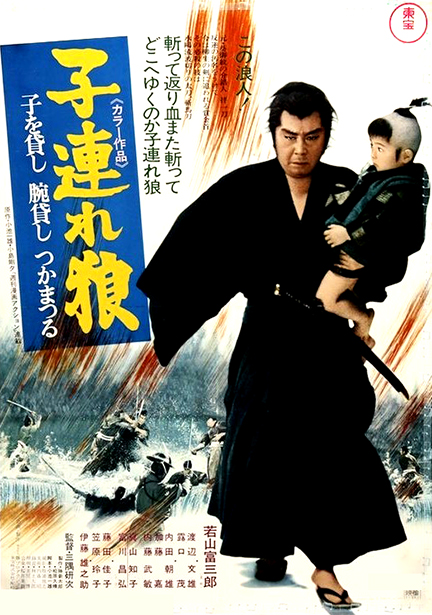
WHAT CHRIS THOUGHT: In talking with Jon we agreed that, taken in context of the last decade or so of films being used to set up other films, Sword of Vengeance (let’s agree to skip the LW&C prefix for these titles, shall we?) feels a lot like “let’s get the backstory and main players set up and established so that we can get to the real stuff next time!” Which isn’t to diminish the charms this first installment of Ogami and Daigoro’s adventures on the path to Hell and ultimate retribution. Indeed, I’d love it if Marvel and other “extended universe” franchises took a cue from how Kenji Misumi maneuvers his players into position.
The cutting back and forth between Ogami‘s current situation (Sword/Son for Hire, traveling the country to exact his revenge) and the past where we see the death of his family and the setup by the shadow clan to take over the Executioner role Ogami once claimed is pretty clear cut and works to keep the action fairly steady. Whether it’s Ogami fighting off the clan sent to “arrest” him after the murder of his wife or Ittō ripping apart a gang of thieves on his current travels, there’s really a nice balance of action/exposition, even if the story barely moves forward over the course of the film’s brief runtime. I can understand why when it was re-dubbed and re-cut for the first Shogun Assassin film they only used a fraction of this film and merged it with the larger story of the second entry, Baby Cart at the River Styx.
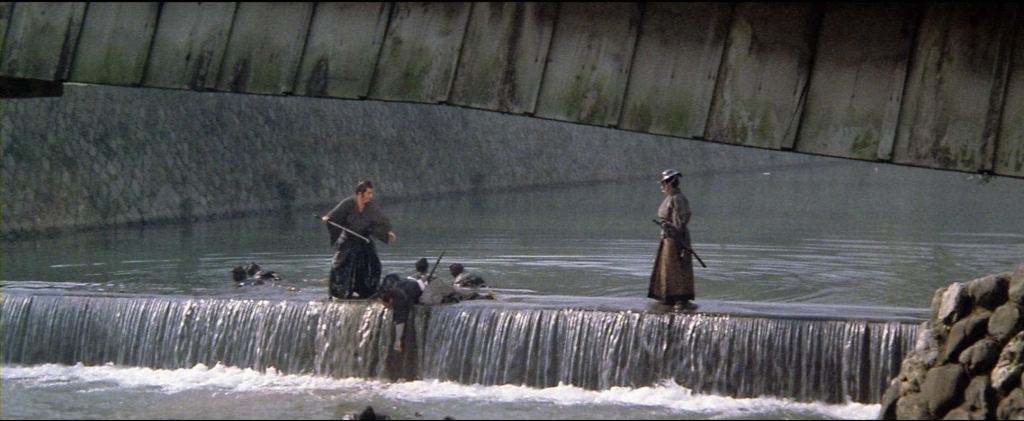
ANYTHING ELSE, JON? As Chris states below, I think the cinematography by Chishi Maikura is the obvious highlight of this first film. Most of the notes I took while watching, if they weren’t about trying to keep track of all political machinations of who was plotting against who, were largely about calling out shots that I liked. The scenery at the river and the field are gorgeous. The violence in the fight scenes is gruesome and the slow motion decapitation in the duel manages to be both. I even like the more abstract elements, like the shots against the pure white background, and the symbolic shot of them walking the middle way with the water and fire on either side. While I suspect that the circus of murder will continue to be this series bread and butter, I hope the series doesn’t lose those less concrete visual motifs.
ANYTHING ELSE, CHRIS? I’m not going to argue Sword of Vengeance is anything other than violent exploitation, but man, it’s such wonderfully staged exploitation. Misumi has a great eye for framing, whether it’s simply to hide a practical effect (Ogami slices a baddie, who stands up out of frame so that someone can then throw a severed head on the ground) or to accentuate the crux of an emotional scene – I’m thinking specifically of Osen the prostitute who, faced with Ogami’s “other” sword turns to the camera with shock. As Ogami stands behind her to the left, slightly out of focus Misumi intently focuses on her head, but not all of it – the top is cut off.
I can’t claim to know the reasoning behind the choice – most directors would probably have asked her to move down a bit so they could frame her entire head. But it’s such an interesting, personal choice, and the entire film is shot that way: the work by cinematographer Chishi Maikura is sublime. As is the incredible blood that’s spilled everywhere. When Chekov’s baby carriage is finally used and Ogami devastates the thieves in the village it’s a luxuriously over the top display of violence. Tarantino obviously bowed at the feet of these films when he was making the Kill Bill series.
One final thought: though at this point I haven’t seen any of the other films in the series yet, I can’t wait to see how they deal with the aging Daigoro. I’ll assume different child actors but damn if Akihiro Tomikawa wasn’t a perfect little demon baby. No wonder he chose the sword…

THE FINAL WORD(S): For Chris the build up and exposition didn’t hinder an explosively fun 87 minutes of blood and more blood. For Jon, film series have to start somewhere and Sword of Vengeance does that job admirably.
NEXT TIME: The adventures of Ittō and Daigoro continue in Lone Wolf and Cub: Baby Cart at the River Styx.
 Cinema Dual