
Shaken, Not Stirred takes a (brief) look at the James Bond canon from Eon Productions. Twice a month, Chris and Jon share their impressions of each film, both on its own terms and in terms of the cultural landscape as well as the genre it helped to create, not to mention its intersection in the Cinema Dual hosts’ lives.
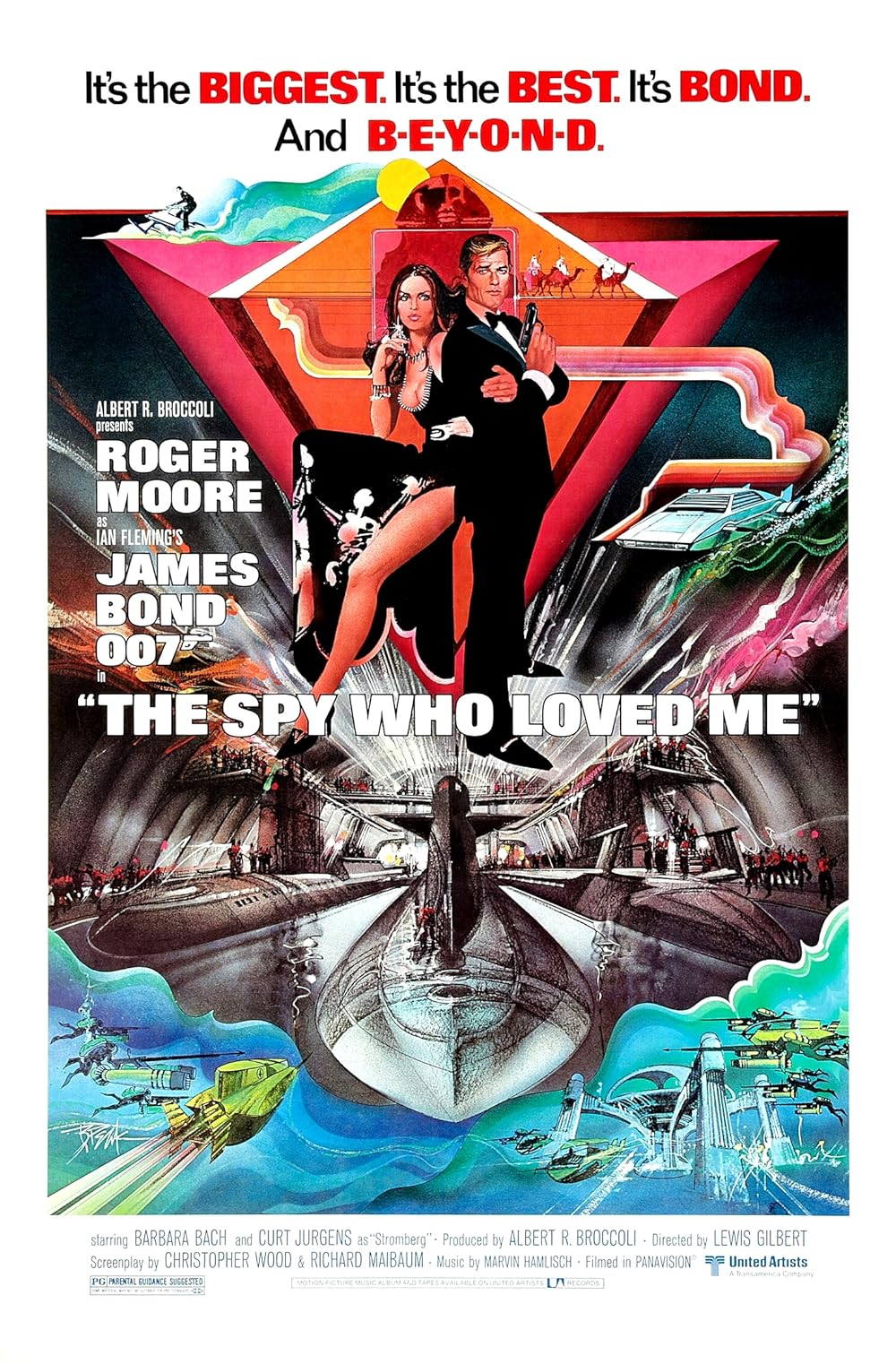
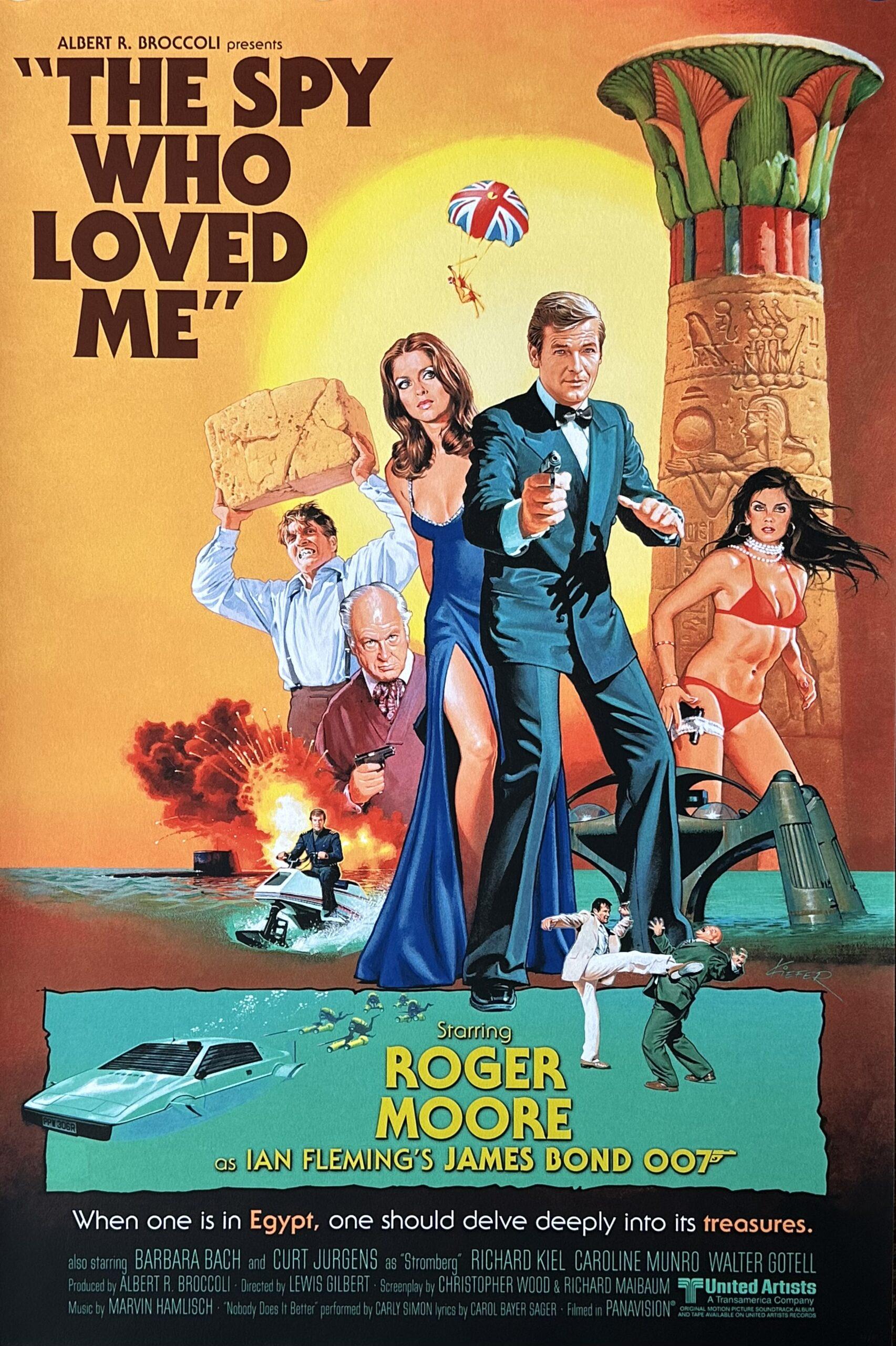
FROM THE (LETTER)BOX(D): It’s the BIGGEST. It’s the BEST. It’s BOND. And B-E-Y-O-N-D. Russian and British submarines with nuclear missiles on board both vanish from sight without a trace. England and Russia both blame each other as James Bond tries to solve the riddle of the disappearing ships. But the KGB also has an agent on the case.
WHAT CHRIS THOUGHT: Okay, just so we’re clear…we got ANOTHER villain with ANOTHER shark tank for dispatching traitors, ANOTHER underground lair/laboratory that Bond gets to haphazardly destroy, and ANOTHER plan to start WWIII. But this time it’s because…
…the villain really likes fish?
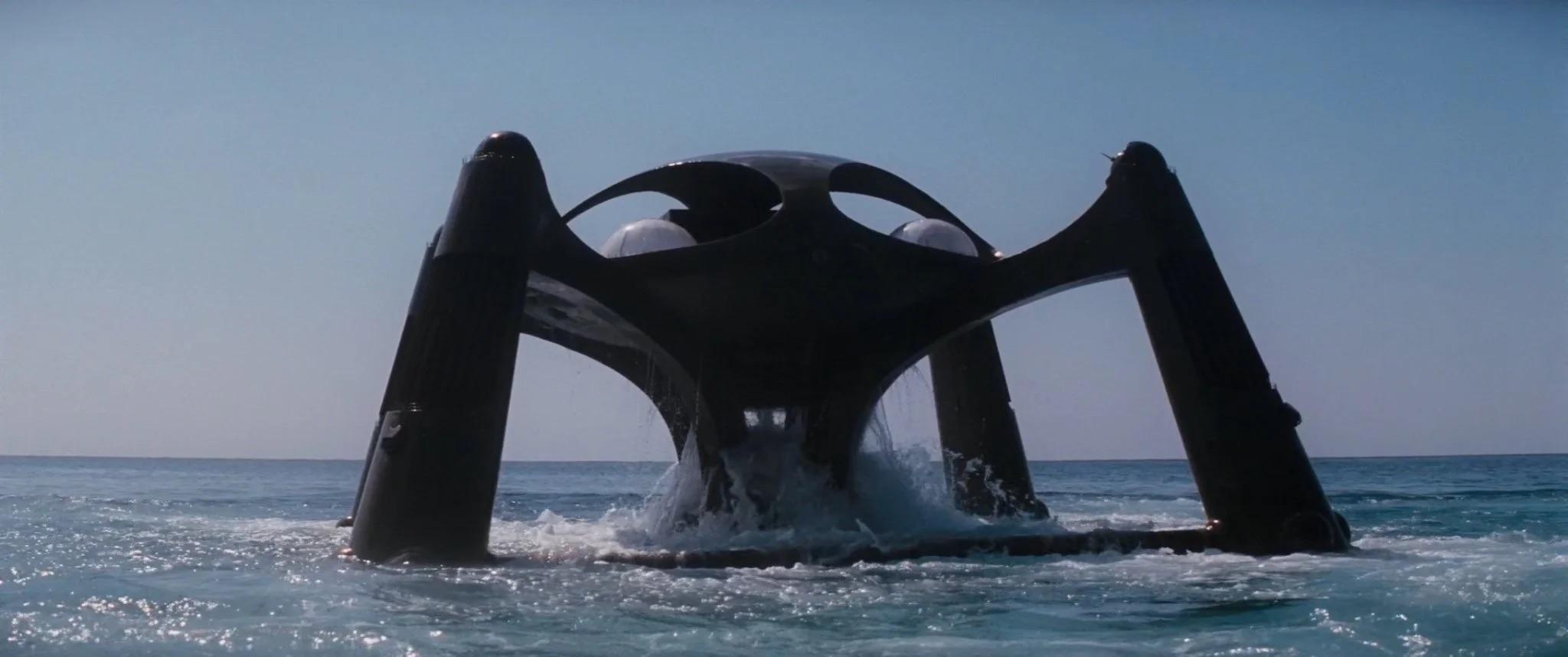
Honestly, I can’t remember precisely why billionaire Karl Stromberg (maybe the worst Bond villain name in the series) wants to create a new Atlantis, but at least it allowed Lewis Gilbert to build in The Spy Who Loved Me one absolutely kickass Superfriends Hall of Doom-inspired base. It also lets Roger Moore refine the Bond persona to better match his strengths—he already feels older than my dad at this point.
But where the film really shines is its utter fearlessness in winking to the audience. At this point, Bond is the epitome of a boy’s adventure series come to life. I wish the third act wasn’t the retread of You Only Live Twice it feels like, with the camaraderie of the military to help Bond out à la Goldfinger. I want to wag my finger at the film, admonish it for its laziness. But I think the producers know what they have at this point, and some of the fun they have is what really endears the film to me. You have one of the worst theme songs of all time, but Marvin Hamlisch has the time of his life with the score, at one point even cutting off the famous 007 theme as part of a visual gag.
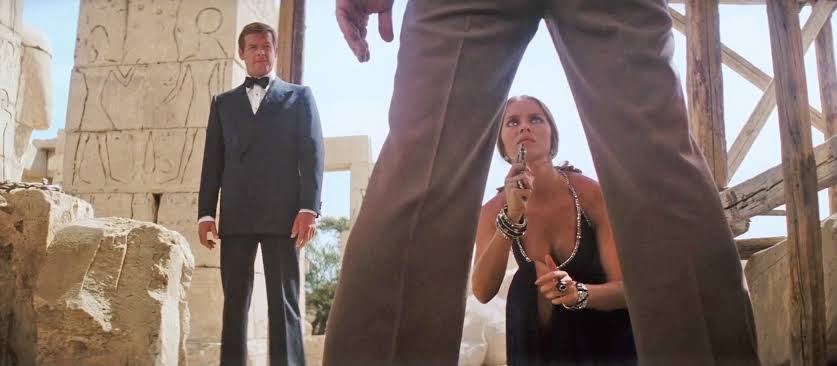
WHAT JON THOUGHT: By the halfway mark of this film, I was developing a pet theory that The Spy Who Loved Me might be the inverse of The Man with the Golden Gun. Where that movie succeeds on the basis of a memorable villain without much else going on, this movie had so much going for it except the villain. Even if Barbara Bach’s Anya Amasova dynamic with Roger Moore evokes the romance in From Russia with Love, it’s still a compelling pairing that essentially works. Bach smolders on screen and doesn’t let Roger Moore get away with much of anything. She knows so much about Bond that she even references his dead wife from On Her Majesty’s Secret Service, in a rare nod to series continuity. Her professionalism leaves Roger Moore only able to spout off hack jokes about women drivers, and the inevitable reveal that Bond killed Anya’s lover is similarly met with her firm commitment to put the mission first.
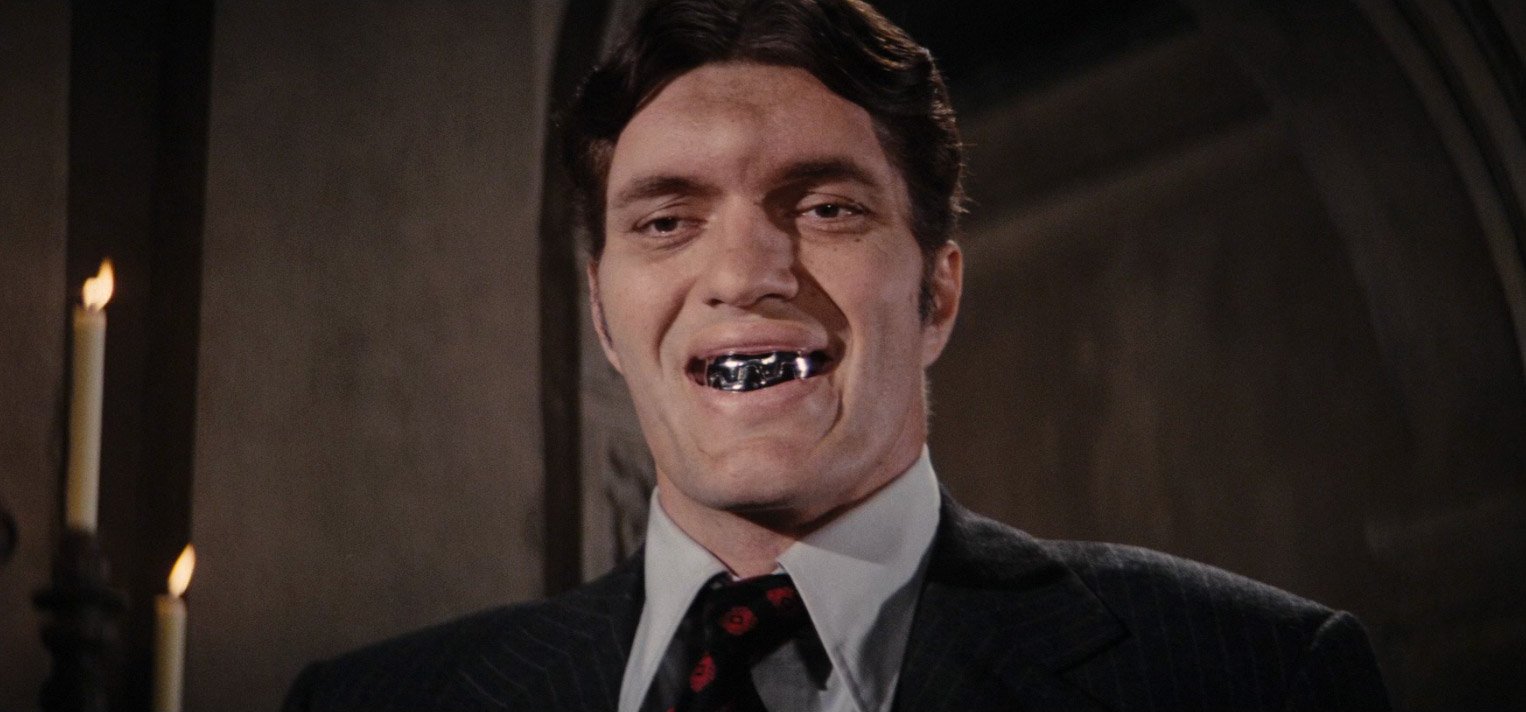
IIn this first half of the movie, we are also introduced to arguably one of the most iconic henchmen in Bond history, which, given that there are two henchmen in the film, gives us a 50% success rate. It’s fascinating that David Prowse—who famously wore the Vader suit—almost got the role, given how much Vader-like menace Richard Kiel ultimately brings to Jaws. The awkwardness of how they shoot his throat-biting scenes aside, the menace of Jaws is always completely understood, even without him ever saying a single word. While I have not seen Moonraker since I was a kid, I completely understand why the producers would want to bring Jaws back.
Sadly, the second half of this movie mostly takes Anya and Jaws off the table in favor of doing a retread of You Only Live Twice. You can practically smell the whiteout on the script pages as they replace the word “Blofeld” with “Stromberg” and “volcano lair” with “underwater base.” Stromberg’s plot is the same as well, to trick the opposite sides of the Cold War into destroying each other by commandeering sensitive military assets. This is, of course, immediately undermined by the fact that the whole premise and title of the movie are about how those two sides agree to have their agents work together to find a resolution instead of resorting to nuclear war.
ANYTHING ELSE, CHRIS? This being my first viewing of Richard Kiel as Jaws in the context of an actual James Bond film, I was surprised at how much they played it for laughs, again winking to the audience. Kiel makes the most of a limited part; not being able to speak, his physical gestures and mannerisms speak for him—the scene where he looks at a poor man whose house has just been flattened by a falling car, shakes the dust off his totally boss bright blue double-breasted blazer, and walks away. I think even Bond took a moment to cheer at that one.
While Kiel may be the best practical effect in the film, all the other set pieces, stunts, and miniature work are exemplary. I already mentioned the incredible water fortress, but we also get the car that transforms into a submersible, that astounding opening sequence with the ski jump…but if I’m being true to my feelings, it is simply Roger Moore in full naval dress riding a water boat to the rescue that will be the lasting visual in my mind from The Spy Who Loved Me.
ANYTHING ELSE, JON? Checking in with our usual set of supporting players, I found myself disappointed with this movie’s Moneypenny scene, and similarly M is supportive of Bond in a way that frankly I find off-putting. Only Q gets anything of note to do in this movie, and even some of his quips feel a bit reused. The highlight of this small section of the film is the ridiculousness of the whole setup. We’ve had some interesting field offices in past films, like a submarine, for example. But I think an archeological dig site littered with hieroglyphs might be the silliest place I’ve seen this government branch set up shop, and the gadgets only accentuate how out of place they are. The payoff of the submarine car driving from the ocean to the beach as onlookers gawk is good comedy.
If there is a sequence in the film that is legitimately great, without resorting to comedy, it would have to be the parachute jump that leads into the opening credits. The ski chase that precedes it is a bit hard to take seriously, what with the disco scoring most of the affair. But when that stunt double launches off the cliff and you get the extended shot of him freefalling, it’s not until you see the Union Jack that you realize you’ve actually been holding your breath the whole time. And speaking of the opening credits, Carly Simon delivers another banger of a theme song with her performance of “Nobody Does It Better.”
THE FINAL WORD(S): For Jon, The Spy Who Loved Me is not without charms, but really fails to bring anything new to the franchise. Chris largely feels the same, but he admits he’s grooving way more on the Bond era than he expected.
NEXT TIME: WHERE ALL THE OTHER BONDS END, THIS ONE BEGINS IN MOONRAKER!
Leave a Reply